Smuggled weight-loss pens surpass cigarettes in border seizures
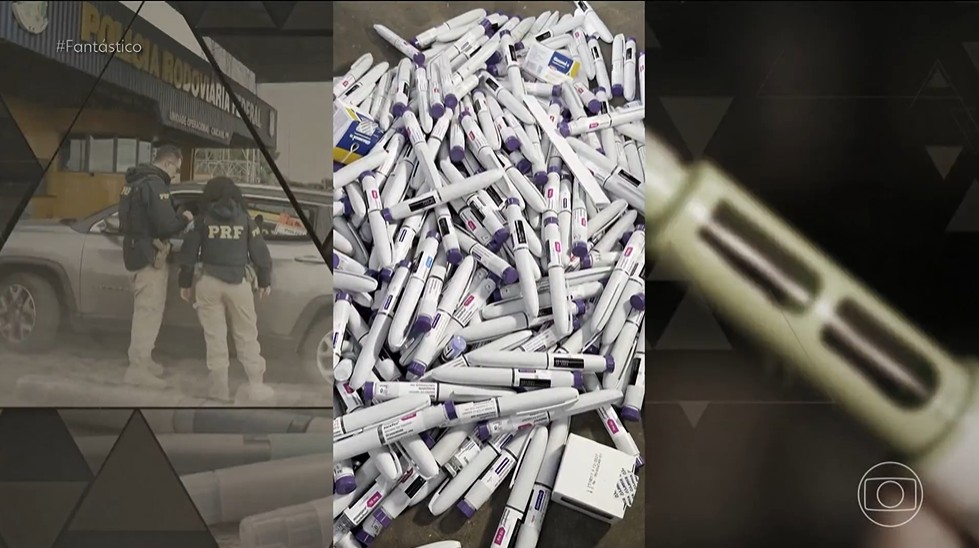
The smuggling of weight-loss pens has surged dramatically, becoming one of the primary contraband items seized at the Brazil-Paraguay border. These products have overtaken cigarettes as the most apprehended items by the Federal Revenue Service in Foz do Iguaçu, Brazil, second only to smartphones. Just two years ago, these medications were not even among the top ten seized items, but now they represent a clandestine market worth billions of reais that challenges enforcement efforts. Criminals employ various methods to transport these pens, hiding them in vehicle compartments, truck parts, food cargo, and even on passengers' bodies.
A significant operation by the Federal Highway Police recently uncovered the largest seizure of weight-loss pens in the country: over 30,000 units hidden in a truck bound for São Paulo. This haul was five times larger than the previous record. The confiscated cargo included various weight-loss drugs, some with substances not registered in Brazil or illegally marketed alternatives. The booming demand, fueled by social media and the desire for rapid weight loss, drives this multi-billion real illicit market, estimated at R$10 billion in just six months. Most illegal products enter Brazil from Paraguay, where no weight-loss pens are registered with the National Health Surveillance Agency (Anvisa) for sale in Brazil, meaning their quality, safety, and efficacy have not been assessed.
Investigations reveal that many substances originate from China and India, often arriving in Paraguay for repackaging before being sent to Brazil and Argentina. Authorities also frequently seize empty packaging, syringes, and assembly components, indicating sophisticated counterfeiting and refilling operations. Beyond land borders, international mail is also used, with the Federal Revenue Service confiscating a ton of these medications at Viracopos International Airport from Chinese shipments. Clandestine manufacturing facilities have also been shut down in Rio de Janeiro, São Paulo, and Alagoas. Experts warn that this contraband poses significant public health risks due to the lack of sanitary control, with no guarantees on the origin of substances or manufacturing conditions. Anvisa advises patients to use only registered medications from authorized sources under medical supervision, as the illegal import of medicines carries severe penalties, including 10 to 15 years in prison.
The escalating contraband of unregulated weight-loss pens highlights a potent intersection of consumer demand, social media influence, and regulatory gaps. The immense financial incentives within this multi-billion real illicit market incentivize sophisticated smuggling and counterfeiting operations, demonstrating a significant challenge for border control and public health agencies. The situation underscores the critical need for robust international cooperation in supply chain oversight, particularly concerning pharmaceuticals originating from regions with less stringent manufacturing and export controls. Furthermore, the demand-side pressure, amplified by digital platforms, suggests a broader societal emphasis on rapid aesthetic transformation, potentially outpacing public health education on safe and regulated health practices. Addressing this requires a multi-pronged strategy: enhanced enforcement, proactive public health campaigns emphasizing evidence-based wellness, and potentially exploring more agile regulatory pathways for demonstrably safe and effective treatments to preempt the illicit market's growth.
AI-generated to prompt reflection — not editorial opinion, not advice, not a statement of fact. How this works.