Sociologist: Middle East Conflict Creates Manichean Divisions in Society
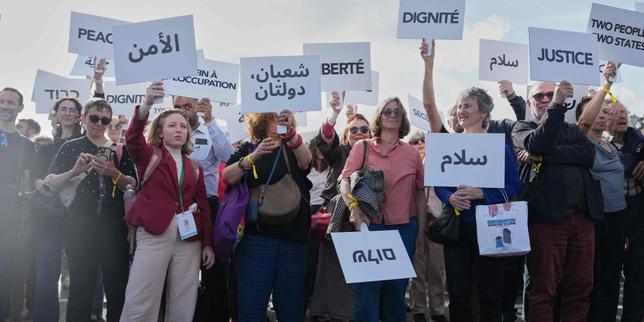
Sociologist Laetitia Bucaille, writing in Le Monde, analyzes how the conflict in the Middle East is fostering rigid stances that trap individuals and societies in black-and-white representations. She argues that the events of October 7th and the situation in Gaza have become a 'fault line that undermines social cohesion and the democratic spirit.' Bucaille observes that the conflict is increasingly generating polarized viewpoints, making nuanced discussion difficult. This polarization, she suggests, can lead to a freezing of perspectives, hindering progress and understanding. The sociologist's analysis points to the broader societal implications of such deeply entrenched divisions. She highlights the challenge of maintaining democratic discourse when complex geopolitical issues become simplified into opposing camps. The piece emphasizes the need to move beyond these simplistic representations to foster a more cohesive and democratic society.
The analysis highlights how geopolitical conflicts can become symbolic battlegrounds, potentially exacerbating societal divisions by encouraging simplistic, polarized viewpoints. This dynamic can strain social cohesion and democratic discourse, as complex realities are reduced to binary oppositions. The framing of such issues as a 'fault line' suggests a critical juncture where the ability of democratic societies to engage in nuanced debate is tested. Future societal resilience may depend on developing mechanisms to navigate these symbolic conflicts without succumbing to entrenched, manichean representations, thereby preserving space for critical thinking and democratic engagement.
AI-generated to prompt reflection — not editorial opinion, not advice, not a statement of fact. How this works.