Socrates' Trial: A Philosophical Martyr or a Political Pawn?
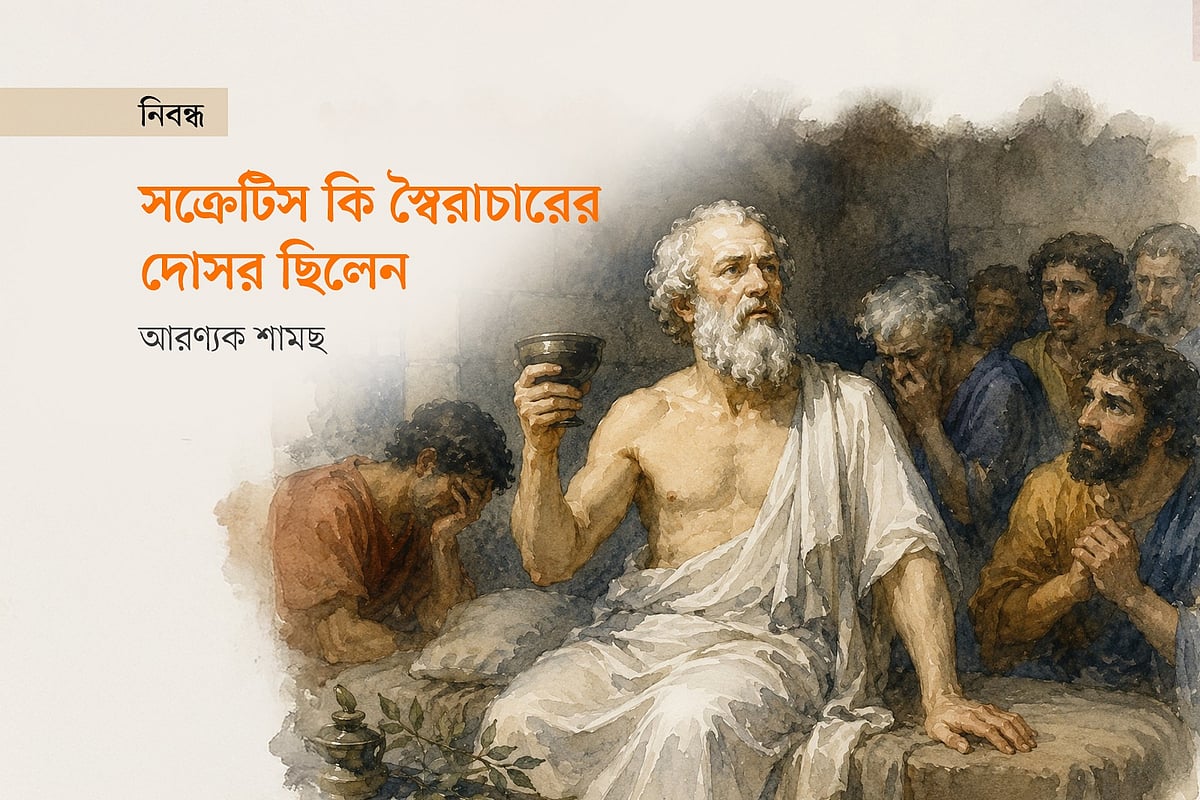
In 399 BCE, the 70-year-old philosopher Socrates faced execution in Athens, calmly accepting hemlock poison rather than renouncing his beliefs. His trial, a pivotal event in Western civilization, raises questions about the charges, their origins, and the political machinations behind them. This article delves into the historical context, arguing that Socrates' death was not merely the end of a philosopher but a consequence of an enduring political game.
The trial occurred in the aftermath of the Peloponnesian War (431-404 BCE), which left Athens defeated by Sparta. A brutal oligarchy known as the 'Thirty Tyrants' seized power, ruling for eight months with extreme violence, executing around 1,500 citizens and dismantling democratic institutions. Their leader, Critias, was a former student of Socrates. When democracy was restored in 403 BCE, a general amnesty was declared, preventing direct prosecution of the former tyrants' associates. This created a political vacuum, and Socrates, a prominent public figure whose students included Critias and Alcibiades, became a symbolic target.
Socrates, a stonemason's son, never held a profession or wrote books, instead engaging citizens in philosophical discourse in the Athenian marketplace. His questioning method, while famous, also created enemies. His association with Alcibiades, a brilliant but controversial military leader who later betrayed Athens, and Critias, the ruthless tyrant, provided ammunition for his accusers. Furthermore, Socrates himself was critical of democracy, questioning whether the majority's opinion should always prevail, which alienated some democrats. The formal charges were impiety and corrupting the youth, but the unstated accusation was his alleged complicity with the tyrants. This strategy, brought by Meletus, Anytus, and Lycon, used vague religious and moral accusations to circumvent the amnesty and implicitly link Socrates to Athens' recent suffering, despite evidence suggesting Socrates defied Critias' orders and publicly criticized him during the tyranny, and also opposed an unlawful death sentence against military commanders after the Arginusae battle, demonstrating his resistance to authority.
The trial and execution of Socrates represent a complex interplay between philosophical inquiry and political expediency. The restored Athenian democracy, seeking stability after a brutal oligarchy, faced a dilemma in holding accountable those associated with the former regime due to a general amnesty. By prosecuting Socrates on charges of impiety and corrupting the youth, his accusers effectively circumvented legal barriers to address perceived political threats indirectly. This strategy highlights how abstract principles like religious belief and moral influence can be weaponized in political arenas, particularly when direct political charges are legally untenable. The narrative suggests that Socrates' execution may have served as a symbolic purging, satisfying a public demand for retribution without directly violating the terms of the amnesty. This historical event offers a timeless case study on the challenges of balancing justice, political stability, and freedom of thought, particularly in societies transitioning from authoritarian rule.
AI-generated to prompt reflection — not editorial opinion, not advice, not a statement of fact. How this works.