Sonam Wangchuk's Hunger Strike Gains International Media Attention
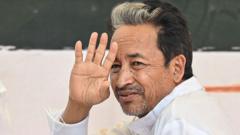
While the central government does not appear to be actively responding to Sonam Wangchuk's hunger strike, his protest has garnered significant attention in international media. Various prominent global news organizations have covered his fast, highlighting its significance. The original article prompts readers to explore the perspectives published by these major world media outlets. Wangchuk, a renowned engineer and education reformist, began his hunger strike on April 5th in Ladakh, demanding constitutional safeguards for the region under the Sixth Schedule of the Indian Constitution. He aims to protect Ladakh's fragile environment and unique culture from potential exploitation due to industrial development. The protest has drawn support from environmental activists and civil society groups both within India and internationally. Despite the growing attention, official government engagement with Wangchuk's demands remains limited, raising concerns about the resolution of the ongoing protest.
The international media's focus on Sonam Wangchuk's hunger strike underscores the global resonance of environmental and cultural preservation issues, particularly in regions facing development pressures. This external scrutiny may exert indirect influence on governmental responses by highlighting the stakes involved and potentially impacting international perception. The situation presents a classic tension between regional autonomy, environmental stewardship, and national development agendas. Future policy considerations may need to balance these competing interests more effectively to preempt such protracted and high-profile public health actions, especially in ecologically sensitive areas.
AI-generated to prompt reflection — not editorial opinion, not advice, not a statement of fact. How this works.