Song Young-gil and Kim Yong Argue Legal Eligibility Despite Prosecution's Actions
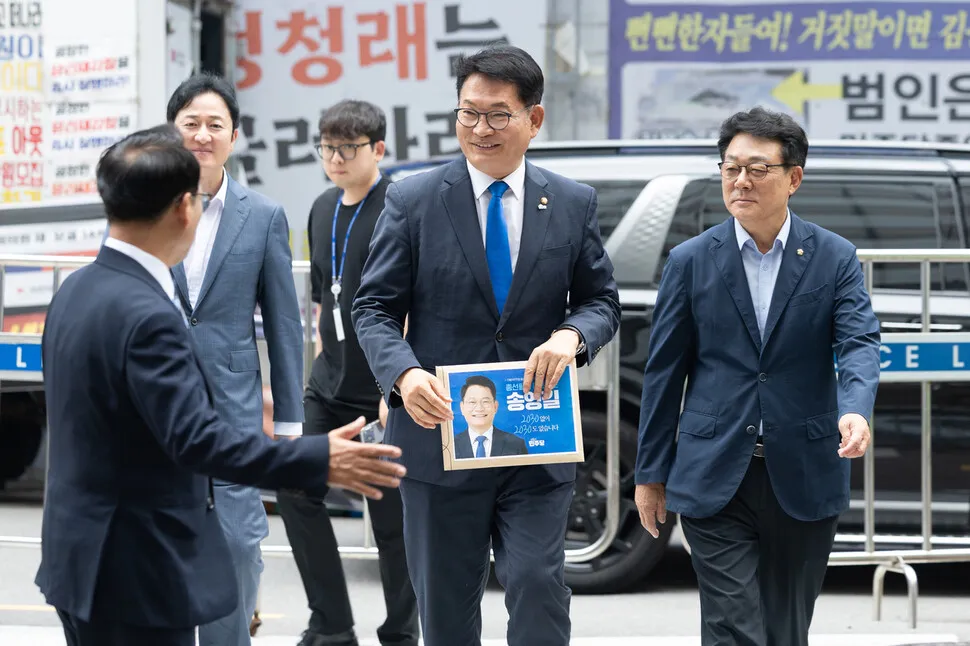
Song Young-gil and Kim Yong, prominent figures facing legal challenges, have jointly asserted that the time they have spent under prosecution should not disqualify them from running for office. They contend that the period during which they were subjected to legal proceedings, initiated by the prosecution, should not be considered a valid reason to deny them their right to be elected. This stance suggests a legal argument that the prosecution's actions themselves should not create a barrier to their political participation. The demand for their right to run for office, known as 'piseongeogwon' in Korean, highlights their determination to overcome these legal hurdles. Their argument implies a belief that the legal process, as it has unfolded, should not negate their eligibility. This situation raises questions about the intersection of ongoing legal battles and the fundamental right to political engagement in South Korea.
This situation presents a critical juncture regarding the eligibility of political candidates facing prosecution. The core tension lies between the legal principle of presumed innocence until proven guilty and the practical implications of ongoing investigations on public trust and the integrity of electoral processes. Arguments that prosecution-induced delays should not impede candidacy highlight the potential for legal proceedings to be weaponized, inadvertently or intentionally, to prevent political opponents from participating. However, electoral systems often incorporate eligibility criteria to safeguard against individuals whose legal standing could compromise their ability to govern effectively or uphold public office. Balancing the right to political participation with the need for accountability and public confidence will be a key governance challenge in the coming decade, particularly as legal and political systems grapple with the influence of digital information and public perception.
AI-generated to prompt reflection — not editorial opinion, not advice, not a statement of fact. How this works.