South Africa's Anti-Migrant Sentiment Linked to Economic Failures
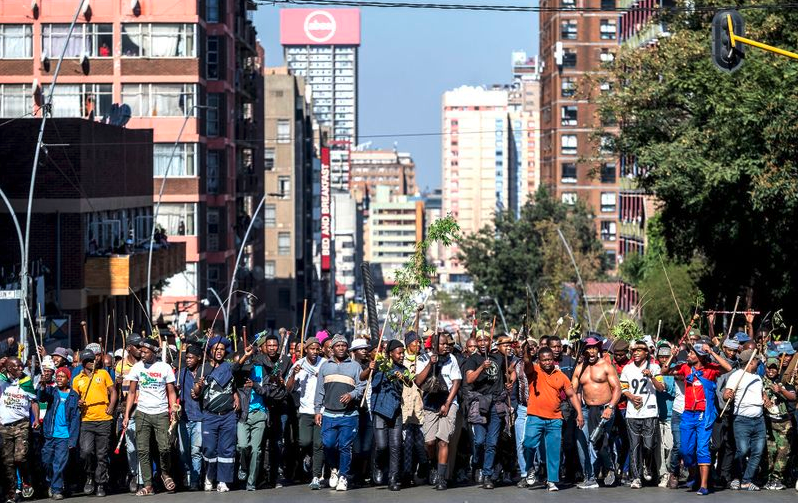
Decades of economic failure in South Africa have fostered widespread desperation, creating fertile ground for an ideological campaign. This campaign, driven by mainstream economic actors, promotes a false narrative of scarcity. Into this environment, political entrepreneurs have introduced migrants as scapegoats, falsely portraying them as illegitimate competitors for resources. This dynamic has fueled an anti-migrant wave, highlighting deep-seated issues within South Africa's economic model. The current economic conditions have generated genuine hardship, which is then exploited by those promoting xenophobic sentiments. The article suggests that the perception of scarcity is not an inherent reality but a constructed narrative used to justify discriminatory attitudes. This framing allows political actors to divert attention from systemic economic problems by blaming an external group. The resulting anti-migrant sentiment is presented as a symptom of a fundamentally flawed economic system that fails to provide for its citizens.
The current anti-migrant sentiment in South Africa appears to be a manifestation of systemic economic distress, rather than an inherent societal issue. Decades of economic underperformance have likely created conditions of scarcity and competition for resources, which are then amplified by political actors. This narrative framing, which positions migrants as illegitimate claimants on limited resources, serves to deflect attention from the underlying structural economic failures. Looking ahead, addressing the root causes of economic stagnation and inequality will be crucial. Failure to do so may perpetuate cycles of scapegoating and social division, hindering long-term inclusive growth and stability in the region.
AI-generated to prompt reflection — not editorial opinion, not advice, not a statement of fact. How this works.