South Africa's 'Harbouring' Law: Ambiguity Creates Fear and Potential Abuse
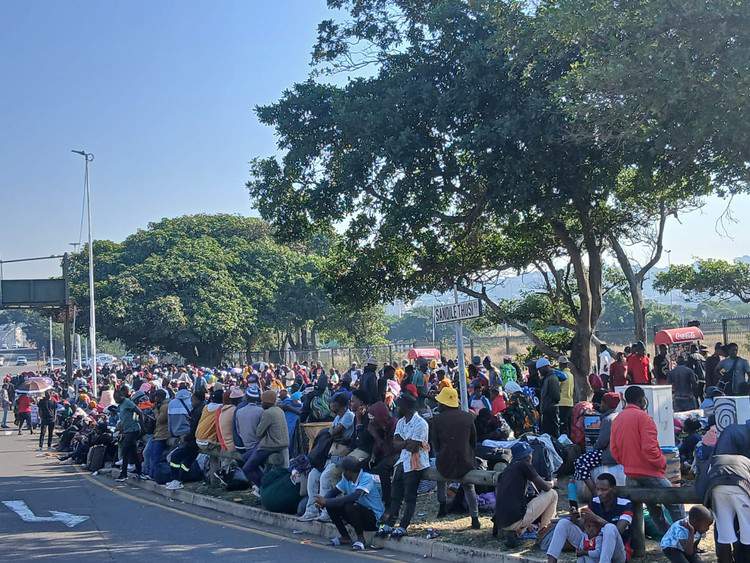
South Africa's government has threatened fines for individuals found 'harbouring' undocumented migrants, but the term itself remains undefined. This ambiguity leaves citizens uncertain about what actions could lead to penalties, impacting decisions within households. Women may hesitate to offer shelter, relatives might reconsider opening their doors, and there is a concern that this legal uncertainty could be exploited by abusers. The lack of a clear definition creates a climate of fear and potential for misuse of the law, as highlighted by Rethabile Mosese. The government's failure to define 'harbouring' leaves the interpretation and enforcement open to subjective judgment, potentially leading to unintended consequences for vulnerable populations and those seeking to provide humanitarian aid. This situation underscores the importance of precise legal language in policy implementation.
The South African government's use of an undefined term like 'harbouring' in relation to undocumented migrants creates significant legal and social risks. This ambiguity, rather than clarifying policy, introduces uncertainty that could disproportionately affect individuals and families, potentially chilling humanitarian assistance and exacerbating existing social vulnerabilities. From a governance perspective, clear legislative definitions are crucial to ensure fair enforcement and prevent arbitrary application of the law. The potential for this ambiguity to be weaponized by abusive individuals highlights a critical failure in policy design, where the unintended consequences for domestic safety and human rights appear to have been overlooked. Moving forward, policy formulation must prioritize precision and consider the broader societal impacts, especially in sensitive areas involving vulnerable populations and the rule of law.
AI-generated to prompt reflection — not editorial opinion, not advice, not a statement of fact. How this works.