South Korea and US Launch $150 Billion Shipbuilding Collaboration
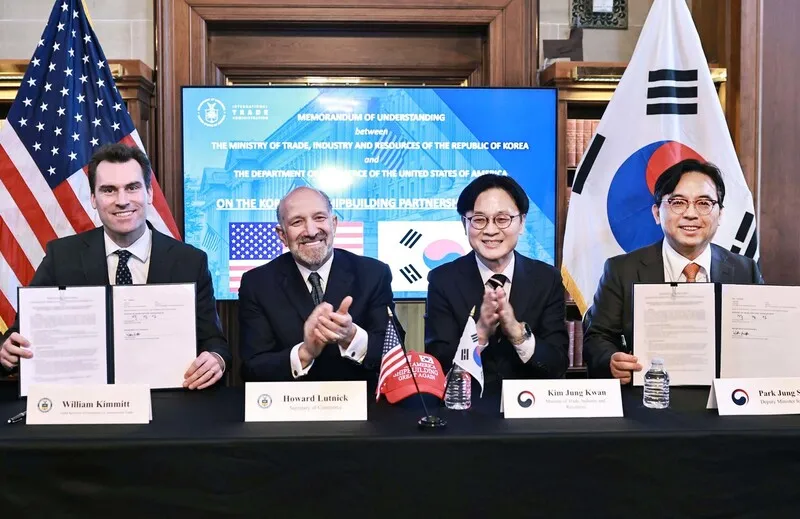
South Korea and the United States are officially commencing a significant shipbuilding collaboration, valued at an estimated $150 billion. As part of this initiative, a local operational base will be established in Washington. This partnership aims to leverage the strengths of both nations in the maritime industry. The collaboration is expected to cover various aspects of shipbuilding, potentially including design, manufacturing, and technological development. The establishment of a base in Washington signifies a commitment to a long-term presence and operational capacity within the United States. This strategic move is anticipated to enhance joint capabilities and foster innovation in shipbuilding. Further details regarding the specific projects and timelines are expected to be announced as the partnership progresses. The scale of the investment underscores the importance both countries place on strengthening their shipbuilding sectors and maritime security. This venture could lead to significant advancements and increased competitiveness in the global shipbuilding market.
The substantial $150 billion shipbuilding collaboration between South Korea and the United States, including the establishment of a Washington-based hub, signals a strategic alignment driven by evolving geopolitical and economic imperatives. This partnership likely aims to bolster supply chain resilience, enhance national security capabilities, and capitalize on technological advancements in naval and commercial shipbuilding. From a systems perspective, such large-scale international cooperation can foster innovation through shared R&D and economies of scale, but also presents challenges in managing intellectual property, regulatory harmonization, and differing industrial policies. Over the next decade, this collaboration could significantly influence global shipbuilding dynamics, potentially creating new standards for efficiency and sustainability, while also testing the capacity of both nations to integrate complex industrial ecosystems effectively.
AI-generated to prompt reflection — not editorial opinion, not advice, not a statement of fact. How this works.