South Korea Announces Principles for School Civic Education, Emphasizing Anti-Discrimination
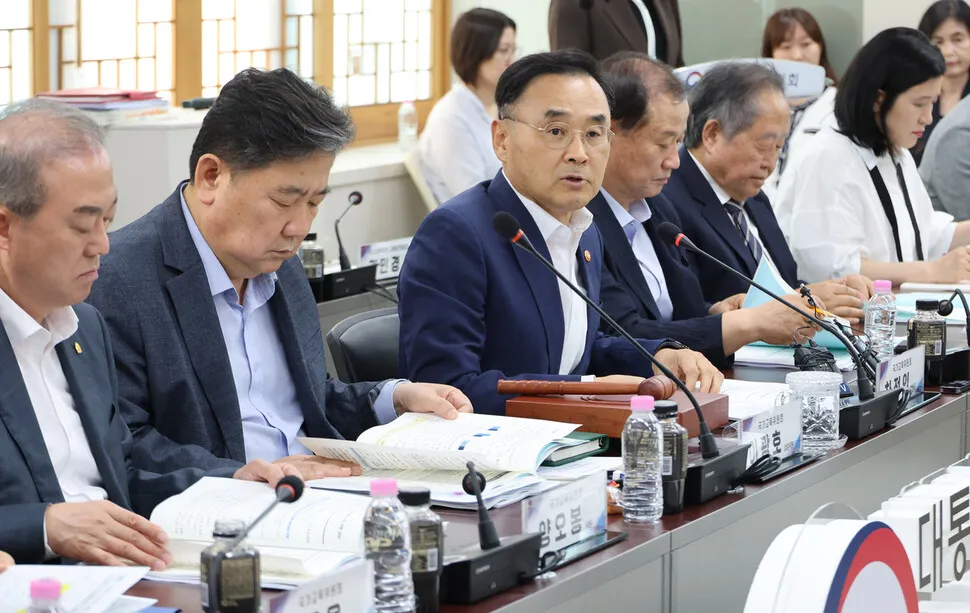
South Korea's Ministry of Education has announced new principles for school civic education, with a strong emphasis on rejecting hate and discrimination. These principles aim to foster a more inclusive and respectful learning environment for all students. The guidelines were developed to address concerns about growing societal divisions and the need for proactive civic engagement from a young age.
A key aspect of the new framework is the commitment to actively combatting all forms of prejudice and bias within educational settings. This includes promoting understanding and empathy towards diverse groups and ensuring that educational content does not perpetuate harmful stereotypes. The ministry stated that these principles are foundational to developing responsible and engaged citizens.
However, the announcement also includes a directive for educators to remain neutral on controversial issues, stating that "controversial matters are neutral." This particular guideline has raised questions about how educators will navigate complex societal debates while upholding the anti-discrimination principles. The ministry has not yet provided specific criteria for determining what constitutes a "controversial matter" or how neutrality will be practically applied in the classroom.
The South Korean Ministry of Education's new civic education principles aim to instill anti-discrimination values, a crucial step in fostering inclusive societies. The directive for neutrality on "controversial matters" presents a significant governance challenge. Balancing the imperative to combat hate with the need to avoid alienating segments of the population or oversimplifying complex issues requires careful pedagogical frameworks. Future iterations will likely need to define "controversial matters" and provide educators with robust training to navigate these sensitive topics, ensuring that neutrality does not inadvertently stifle critical thinking or the examination of systemic inequalities. The long-term impact will depend on the clarity of implementation and the capacity of the education system to equip students with the tools to engage constructively with societal disagreements.
AI-generated to prompt reflection — not editorial opinion, not advice, not a statement of fact. How this works.