South Korea Explores Alternatives to Large-Scale Redevelopment for Housing
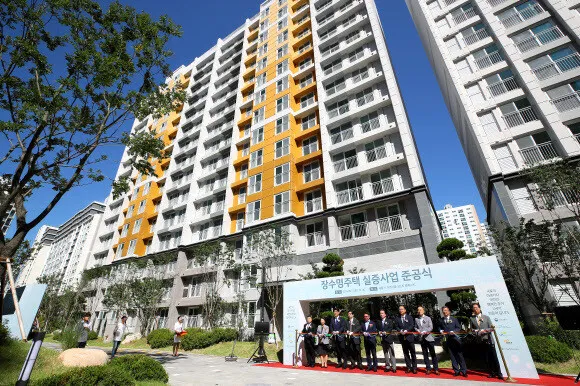
South Korea is considering alternative approaches to housing renewal beyond traditional large-scale redevelopment projects. The focus is shifting towards extending the lifespan of existing homes and promoting smaller-scale maintenance and improvement initiatives. This move aims to address housing needs while potentially offering more sustainable and community-focused solutions. These smaller projects could involve renovating or upgrading individual properties and buildings, rather than demolishing and rebuilding entire neighborhoods. The government is exploring these 'other paths' to diversify urban regeneration strategies. This could lead to a more nuanced approach to city planning, allowing for incremental improvements that preserve local character. The initiative signals a potential departure from the massive reconstruction efforts that have characterized urban development in some parts of the country. It suggests a recognition of the environmental and social impacts associated with large-scale demolition and construction. The exploration of these alternative models is expected to provide more flexible and adaptable options for improving the nation's housing stock.
South Korea's exploration of alternatives to large-scale redevelopment reflects a global trend towards more sustainable urban planning and resource management. By prioritizing the extension of building lifespans and smaller-scale maintenance, the nation may mitigate the significant environmental footprint associated with demolition and new construction. This approach could also foster greater community engagement and preserve existing urban fabric, contrasting with the disruptive nature of mega-projects. The long-term economic implications will depend on the efficiency of these smaller initiatives and their ability to meet housing demand without sacrificing quality or affordability. This strategic pivot could position South Korea as a leader in adaptive reuse and incremental urbanism, offering a model for other densely populated regions facing similar housing and environmental challenges in the coming decade.
AI-generated to prompt reflection — not editorial opinion, not advice, not a statement of fact. How this works.