South Korean Court Awards $620 Million in 'Divorce of the Century'
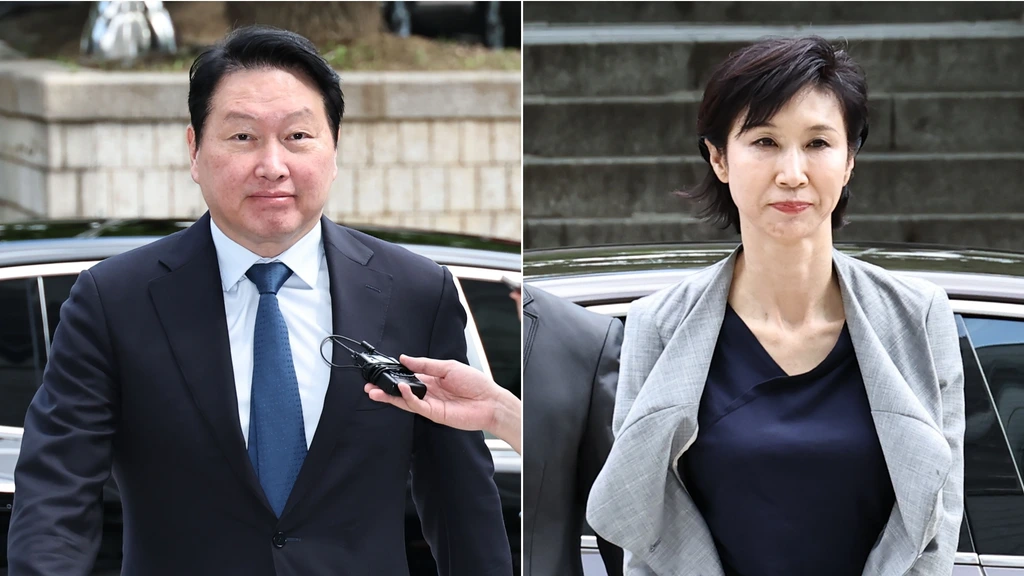
A South Korean court has delivered its verdict in the widely publicized 'divorce of the century' between Chey Tae-won, chairman of the SK Group, and Roh Soh-yeong, daughter of a former president. The judge ruled that Roh is entitled to approximately 570 million euros (around $620 million USD) of Chey's wealth. This decision implicitly acknowledges Roh's significant, though perhaps indirect, contribution to the success of the SK Group, a major South Korean chipmaker, potentially through her family's political influence. Chey and Roh met in 1985 while studying in the U.S. and married in 1987, shortly after Roh's father became South Korea's first directly elected president. Their union was hailed as the 'marriage of the century,' symbolizing the convergence of South Korea's business and political elites. However, this intertwining of powerful families soon drew scrutiny. Roh's father was later convicted for accepting illegal payments from large conglomerates, including the SK Group. South Korea's economy is heavily influenced by chaebols, family-controlled conglomerates that played a key role in the nation's post-war industrialization. While these groups, including SK Group, have driven significant economic growth and made South Korea prosperous, they also face criticism for market dominance and close political ties, which some argue foster corruption and inequality. Chey himself has faced legal challenges, including convictions for illegal trading and embezzlement, though he received presidential pardons on both occasions. Despite controversies, SK Hynix, a subsidiary of SK Group, has thrived in the current AI boom, becoming a global leader in the chip industry and making Chey one of South Korea's wealthiest individuals. The legal battle over their divorce began in 2015 when Chey announced his desire for a separation. Roh sought a substantial portion of Chey's assets, arguing her family connections were instrumental to the SK Group's success, citing alleged illicit presidential funds invested in the company. Chey contested this, asserting his wealth accumulation occurred after their separation. The court's ruling appears to strike a balance, recognizing Roh's contribution without fully endorsing her claim and likely without jeopardizing Chey's leadership. The case has reignited public discussion in South Korea regarding the influence of chaebols and their relationship with political power, highlighting the ongoing debate between their economic importance and concerns about governance and fairness.
This high-profile divorce settlement highlights the complex interplay between South Korea's powerful chaebol economic structures and its political landscape. The court's substantial award to Roh Soh-yeong, while less than she sought, implicitly acknowledges the historical linkage between political influence and corporate success in the nation's development model. The ruling may prompt reflection on governance within family-controlled conglomerates, particularly regarding the ethical implications of presidential pardons for executives and the potential for undue influence stemming from familial ties to political office. As South Korea continues to lead in critical technology sectors like AI-driven chips, understanding the systemic incentives that shape corporate-political interactions will be crucial for fostering sustainable and equitable economic growth in the coming decade. This case serves as a case study in the ongoing societal negotiation of wealth distribution and accountability in economies shaped by historical state-business partnerships.
AI-generated to prompt reflection — not editorial opinion, not advice, not a statement of fact. How this works.