South Korean Political Leaders Clash Over Party Leadership and Responsibilities
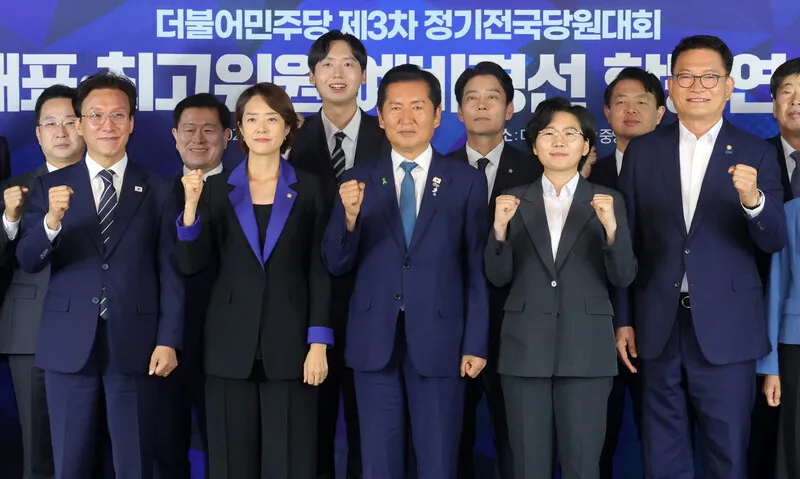
A heated political exchange has erupted among prominent South Korean figures, with Kim calling for an end to the "Myeong-cheong War," a term often used to describe internal party conflicts. Jung asserted that they have "never left the party," implying a commitment to its principles and direction. Meanwhile, Song stated that they would "take responsibility for the results," suggesting a willingness to be accountable for outcomes, likely related to electoral performance or party decisions. The specific context of the "Myeong-cheong War" and the exact nature of the responsibilities Song is willing to assume remain central to this unfolding political drama. These statements highlight significant internal divisions and differing approaches to party unity and leadership within the South Korean political landscape. The discourse suggests a critical juncture for the party, where internal strife and accountability are being openly debated by its key members. The resolution of these disputes will likely shape the party's future trajectory and its ability to engage effectively with the electorate.
This exchange reflects a common dynamic in political parties: the tension between internal factionalism and the need for unified public presentation. The phrase "Myeong-cheong War" suggests a prolonged and potentially damaging internal struggle, possibly over ideology, leadership succession, or policy direction. Kim's call to end it indicates a desire for resolution, while Jung's assertion of never leaving the party may be a defense against accusations of disloyalty or an attempt to reassert their foundational role. Song's pledge to take responsibility for results introduces an element of accountability, which could be a strategic move to either position themselves as a leader willing to face consequences or to deflect blame by setting a clear benchmark for performance. The underlying incentive structures likely involve securing leadership positions, influencing party policy, and managing public perception ahead of future elections. The challenge for the party will be to reconcile these competing interests and internal divisions to present a cohesive front, a task that becomes increasingly complex in a polarized political environment and under the constant scrutiny of a digitally connected electorate.
AI-generated to prompt reflection — not editorial opinion, not advice, not a statement of fact. How this works.