South Korean Stock Market Halts Trading Amidst Sharp Declines
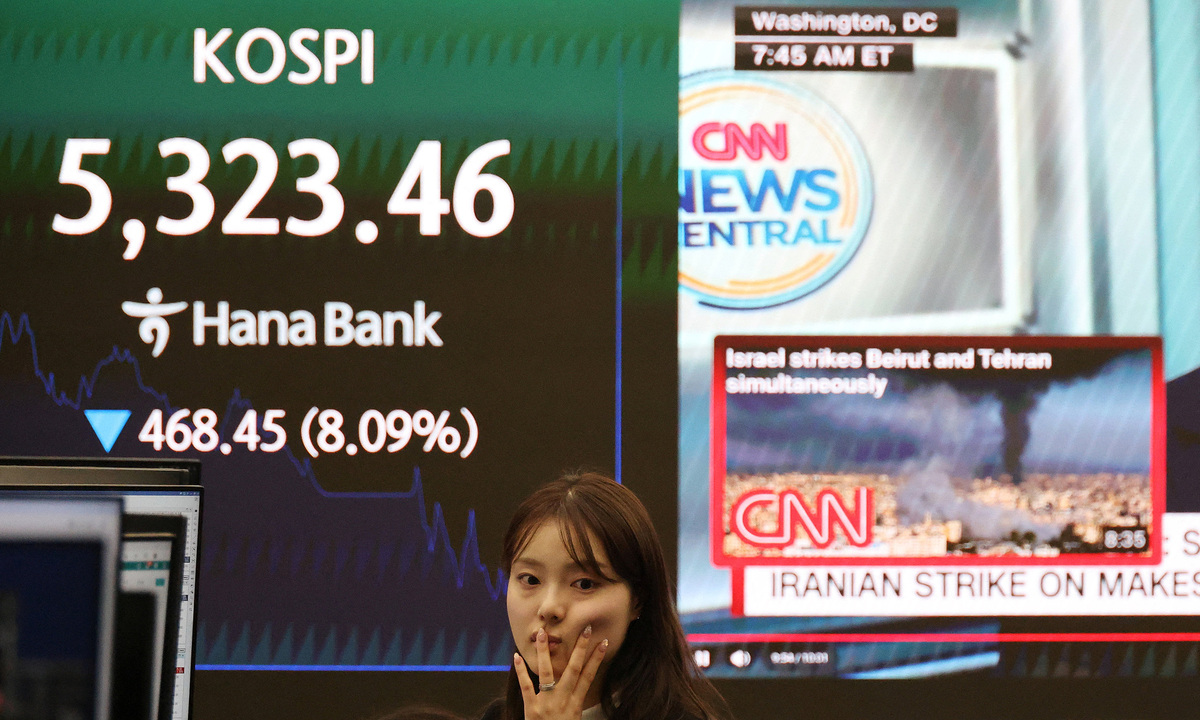
South Korean stock market indices experienced significant drops this morning, leading authorities to repeatedly activate trading suspension mechanisms. The sharp decline triggered circuit breakers, which are designed to halt trading temporarily when prices fall too rapidly. This measure aims to prevent panic selling and allow investors to reassess market conditions. The specific indices that fell and the exact percentage of the decline were not detailed in the provided information. However, the repeated activation of these halts indicates a high level of volatility and investor concern in the market. The situation underscores the sensitivity of financial markets to various economic and geopolitical factors. Further details on the cause of the sell-off and the duration of the trading suspensions would be necessary for a complete understanding of the event.
The repeated activation of trading halts on the South Korean stock market signals a period of significant investor uncertainty and potential systemic risk. Such mechanisms, while intended to stabilize markets, can also reflect underlying fragilities in investor confidence or exposure to external shocks. The frequency of these halts suggests a need to examine the market's resilience to current economic pressures and the effectiveness of regulatory interventions in managing volatility. Looking ahead, understanding the triggers for such sharp declines will be crucial for developing more robust market infrastructure and investor protection strategies in an increasingly interconnected global financial system.
AI-generated to prompt reflection — not editorial opinion, not advice, not a statement of fact. How this works.