South Sudan Army Chief Cites Insecurity Hindering Upper Nile Development
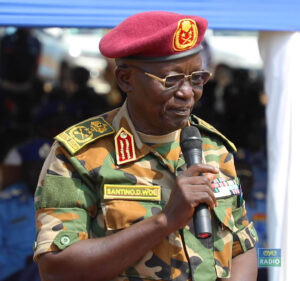
General Santino Deng Wol, the Chief of Defence Forces (CDF) for the South Sudan People’s Defence Forces (SSPDF), stated on Saturday that ongoing insecurity in the Upper Nile Region is impeding development and access to essential services. General Deng shared these concerns at the SSPDF Bilpam headquarters following a meeting with SSPDF officers from the Nuer community in Upper Nile. The persistent instability in the region is identified as a primary obstacle to progress and the delivery of critical resources to the population. This situation highlights a significant challenge for the government in ensuring security and facilitating the necessary conditions for economic and social advancement in Upper Nile. The remarks underscore the complex interplay between security and development, where a lack of stability directly impacts the population's ability to benefit from essential services and infrastructure projects. The SSPDF leadership's acknowledgment of this issue points to the need for comprehensive security sector reforms and peacebuilding initiatives to address the root causes of insecurity in the region. Without improved security, efforts to foster development and improve living standards in Upper Nile are likely to remain significantly constrained.
The statement from the SSPDF Chief of Defence Forces highlights a critical nexus between security and development in South Sudan's Upper Nile Region. Persistent insecurity, as articulated by General Deng Wol, directly impacts the state's capacity to deliver essential services and foster economic growth. This situation presents a systemic challenge, where the absence of a stable security environment creates a feedback loop that hinders progress. Future development initiatives in Upper Nile will likely require a dual focus: not only on infrastructure and service provision but also on robust security sector governance and community-based conflict resolution mechanisms. Addressing the root causes of insecurity, rather than solely its symptoms, will be paramount for unlocking the region's developmental potential over the next decade, especially as resource scarcity and climate change could exacerbate existing tensions.
AI-generated to prompt reflection — not editorial opinion, not advice, not a statement of fact. How this works.