Soviet Salyut 6 Space Station Re-entered Earth's Atmosphere on July 29, 1982
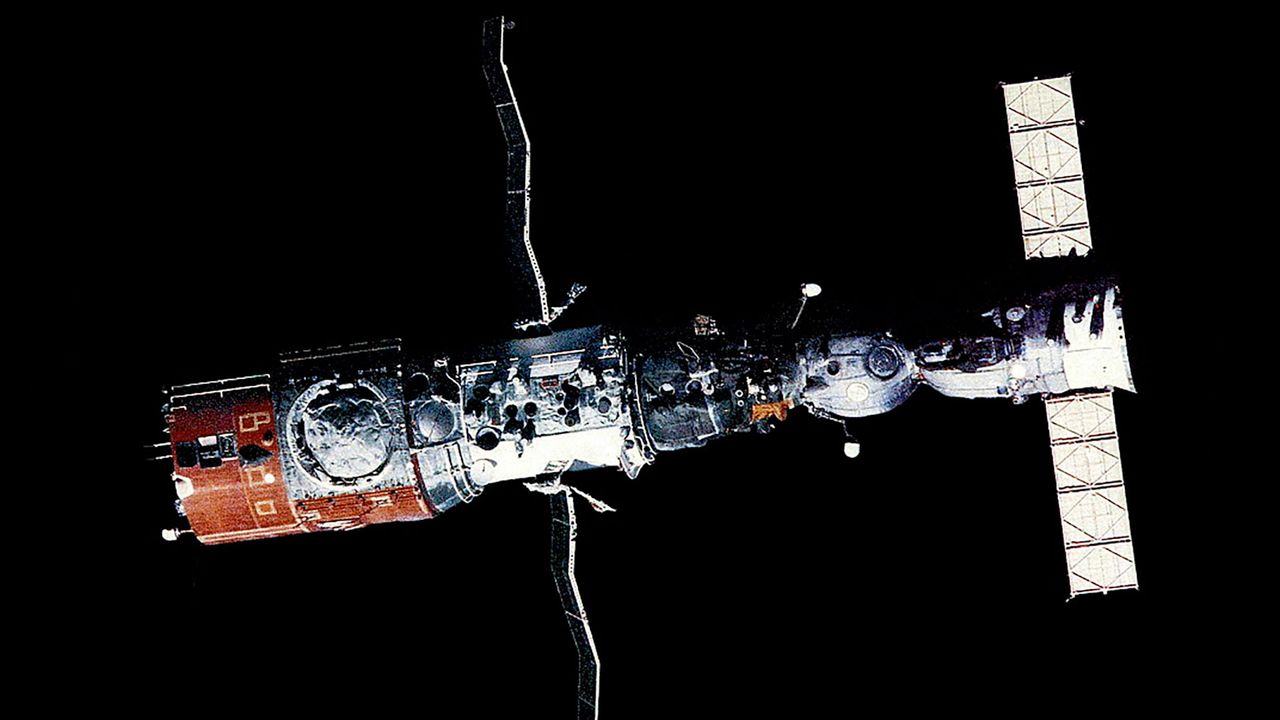
On July 29, 1982, the Soviet space station Salyut 6 completed its mission by safely re-entering Earth's atmosphere. The station burned up during its descent, posing no threat to the planet's surface. Salyut 6 was a significant milestone in space exploration, serving as a crucial platform for scientific research and long-duration human spaceflight. Launched in 1977, it hosted numerous cosmonaut crews and conducted a wide range of experiments. The station's operational lifespan extended beyond its planned duration, demonstrating the robustness of Soviet space technology at the time. Its re-entry marked the end of an era for this pioneering orbital laboratory. The successful management of its de-orbit and atmospheric burn-up also highlighted advancements in space debris mitigation strategies.
The re-entry of Salyut 6 on July 29, 1982, represents a key moment in the history of orbital infrastructure and the evolving challenges of space debris management. As space programs mature, the lifecycle of orbital assets, from launch to de-orbit, requires increasingly sophisticated planning and execution. The safe atmospheric burn-up of Salyut 6 underscores the importance of controlled re-entry protocols. Looking ahead, the increasing congestion of Earth's orbit necessitates proactive strategies for de-orbiting defunct satellites and space stations to ensure the long-term sustainability of space activities. This event serves as a historical precedent for managing the end-of-life phase of space missions, a critical consideration for future space exploration and commercialization endeavors in the coming decade.
AI-generated to prompt reflection — not editorial opinion, not advice, not a statement of fact. How this works.