Soviet Union Launches Phobos 2 Probe to Study Mars and Its Moons
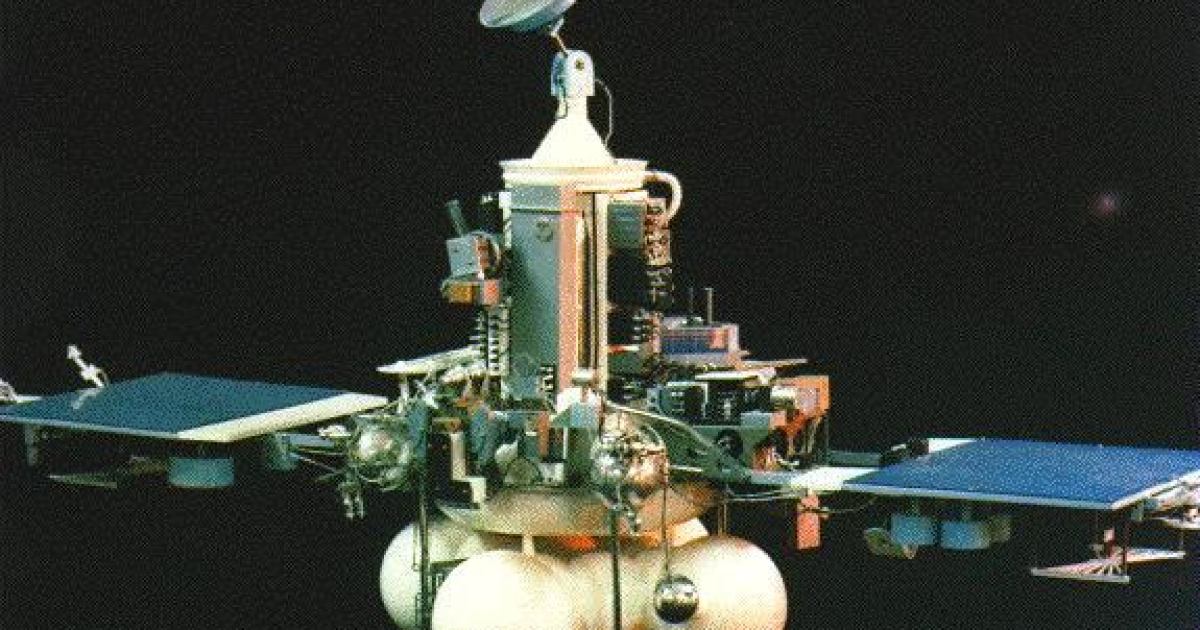
On July 12, 1988, the Soviet Union successfully launched Phobos 2, the second of two uncrewed spacecraft dedicated to exploring Mars and its two moons, Phobos and Deimos. The mission also aimed to study the Sun and the surrounding interplanetary environment. Each probe was outfitted with a comprehensive suite of 25 scientific instruments. These included advanced technologies such as high-energy particle detectors, X-ray and solar photometers, and spectrometers for infrared, ultrasound, and gamma-ray analysis. The first probe in the series, Phobos 1, was unfortunately lost prior to reaching its destination. Phobos 2 was intended to build upon the scientific objectives set forth for its predecessor, providing valuable data on the Martian system and solar activity.
The launch of Phobos 2 in 1988 represents a significant investment by the Soviet Union in deep space exploration, highlighting a period of intense competition and scientific ambition in the space race. The sophisticated instrumentation on board indicates a strategic focus on understanding planetary formation and solar influences. The loss of Phobos 1 underscores the inherent risks and technical challenges of interplanetary missions, even for established spacefaring nations. The subsequent data gathered by Phobos 2, despite its own eventual mission failure, contributed to the broader scientific understanding of Mars and its unique moons, informing future mission designs and scientific objectives for decades to come. This era of exploration laid foundational knowledge for current Mars research.
AI-generated to prompt reflection — not editorial opinion, not advice, not a statement of fact. How this works.