Soyuz MS-29 docks with ISS, delivering three new crew members for Expedition 75
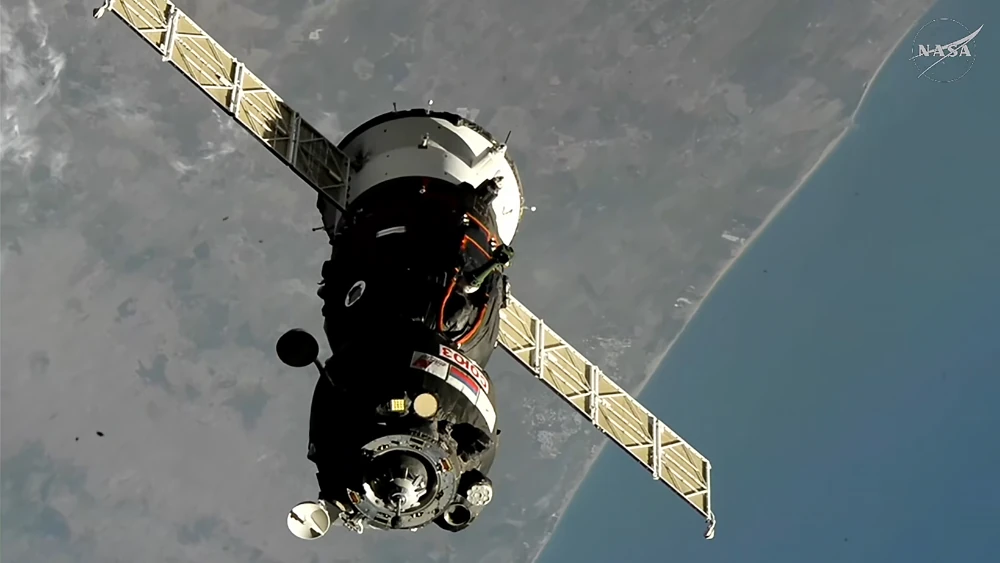
The Soyuz MS-29 spacecraft successfully docked with the International Space Station's (ISS) lower Prichal module late in the evening, just three hours after its launch from the Baikonur Cosmodrome. Onboard are Roscosmos cosmonauts Pyotr Dubrov and Anna Kikina, along with NASA astronaut Anil Menon. These three individuals are joining the ISS crew for Expedition 75. Their mission is scheduled to last until April of next year, potentially making it the longest Soyuz mission to date if all proceeds as planned. During their stay, they will contribute to the maintenance of the ISS and conduct various scientific experiments across different fields. This marks the second space mission for Dubrov and Kikina, while it is Menon's first. They are replacing cosmonauts Sergey Kud-Sverchkov and Sergei Mikaev, and NASA astronaut Chris Williams, who arrived at the station in November 2025 aboard the Soyuz MS-28 and are expected to return to Earth in the coming days. The launch of Soyuz MS-29 represents the third use of the 31/6 launch platform since its repair, with all three launches having been completed without issue.
The successful docking of Soyuz MS-29 highlights the continued reliance on established human spaceflight systems for crew rotation and scientific operations aboard the ISS. This mission underscores the long-duration capabilities of the Soyuz spacecraft, a critical component of international space cooperation. As space agencies increasingly focus on future lunar and Martian exploration, the operational efficiency and reliability of these current platforms provide valuable data and experience. The extended mission duration also presents opportunities to study the long-term physiological and psychological effects of spaceflight, crucial for planning future deep-space endeavors. The seamless integration of crew members from different space agencies demonstrates the robust collaborative frameworks that enable complex extraterrestrial missions.
AI-generated to prompt reflection — not editorial opinion, not advice, not a statement of fact. How this works.