SpaceX Starlink Internet to Be Integrated into Every Tesla Cybercab
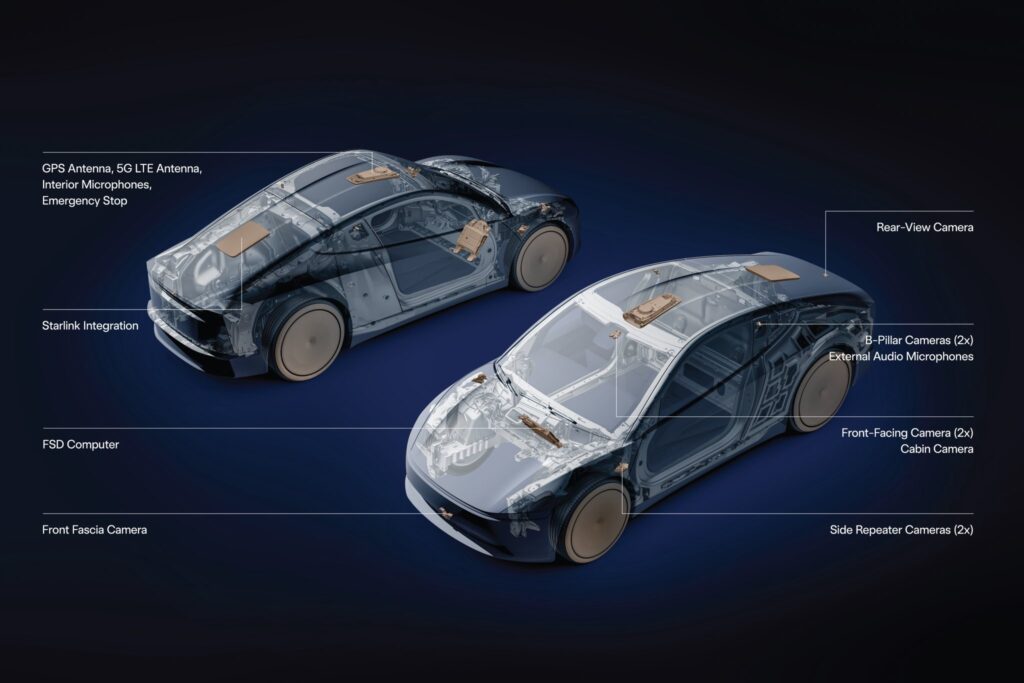
SpaceX's Starlink satellite internet service will be a standard feature in every Tesla Cybercab, with the V5 satellite terminal directly incorporated into the vehicle's roof structure. This integrated design places the Starlink antenna alongside other essential components like the GPS antenna, 5G LTE antenna, FSD computer, and various cameras. This approach represents a departure from earlier prototypes and testing vehicles, which were sometimes seen with external Starlink Mini dishes mounted on the trunk lid. The factory-integrated solution aims for a cleaner aesthetic and potentially more robust connectivity for the autonomous ride-hailing service.
The integration of Starlink V5 directly into the Cybercab's roof structure signifies a strategic move to ensure consistent, high-speed internet connectivity for Tesla's autonomous ride-hailing fleet. This decision addresses potential gaps in terrestrial cellular coverage, which could be critical for the operation of self-driving vehicles and the passenger experience. From a systems perspective, this reliance on satellite internet introduces a new layer of dependency, potentially impacting operational costs and service reliability based on satellite network performance and SpaceX's infrastructure development. The long-term implications involve the evolving landscape of in-vehicle connectivity and the potential for such integrated solutions to become a standard expectation across the automotive industry, particularly for autonomous services.
AI-generated to prompt reflection — not editorial opinion, not advice, not a statement of fact. How this works.