SpaceX Starship's Heat Shield and Engine Software Tested in Flight 14
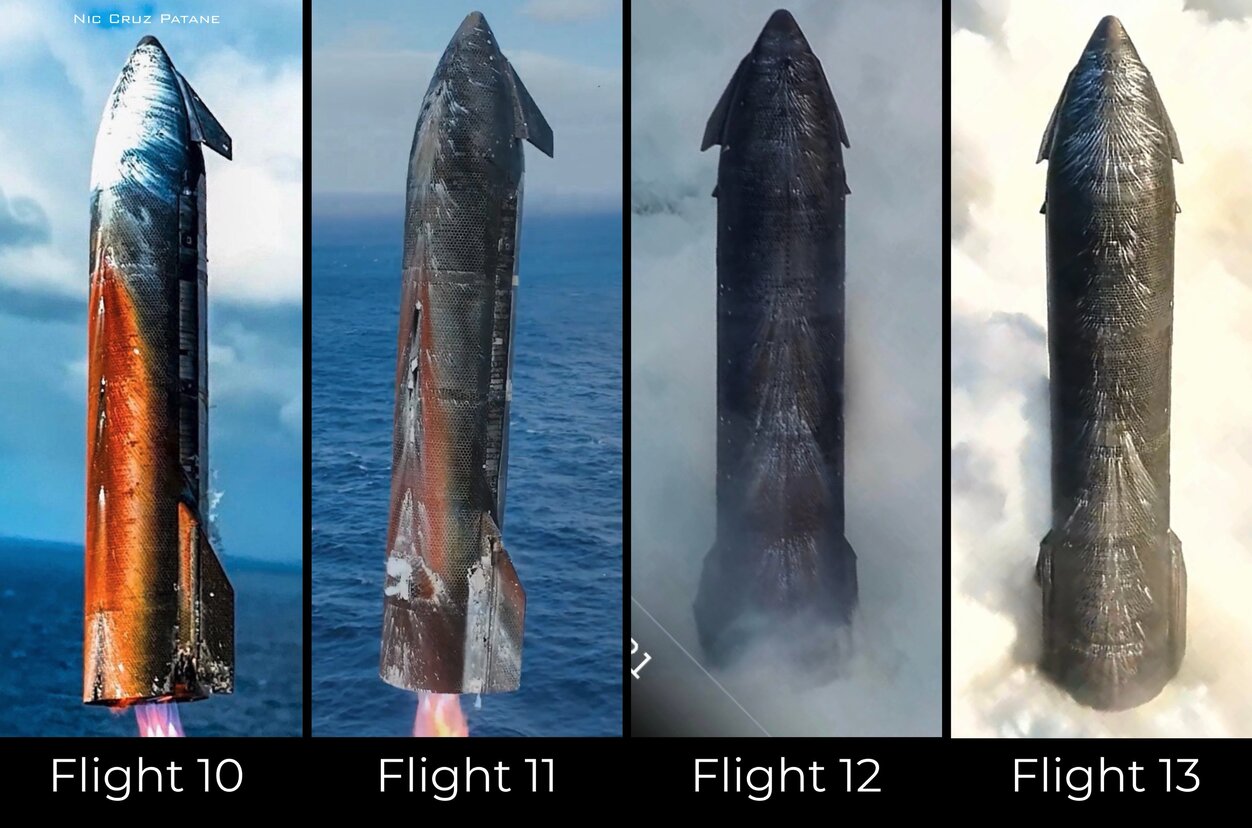
SpaceX intentionally subjected its Starship vehicle to a more demanding reentry trajectory during Flight 14, increasing the dynamic pressure to rigorously test the heat shield system. The spacecraft successfully endured this enhanced stress, completed its flip maneuver, executed a landing burn, and achieved a soft splashdown. Notably, the vehicle remained intact and continued transmitting data after landing. SpaceX representative Dan Huot described the outcome as "a dream scenario" for the team focused on validating the heat shield's performance. This flight aimed to push the boundaries of the system beyond standard operational parameters to gather crucial data for future improvements. The successful survival and data transmission indicate a significant step forward in the development of Starship's reentry capabilities.
Flight 14's experimental reentry profile represents a calculated risk by SpaceX to accelerate the validation of Starship's heat shield technology. By intentionally increasing stress beyond nominal conditions, the company aims to identify system limitations and gather performance data more rapidly than through incremental testing. This approach prioritizes learning and iteration, potentially shortening the development cycle for critical systems. The successful outcome suggests a robust design, but future flights will be essential to confirm long-term durability and performance across a wider range of atmospheric conditions. The focus on engine relight software also indicates a parallel effort to refine the complex sequence required for landing and potential reuse, a key factor in SpaceX's long-term vision for Starship.
AI-generated to prompt reflection — not editorial opinion, not advice, not a statement of fact. How this works.