SpaceX Stock Falls Below IPO Price Amid Broader Tech Sector Struggles
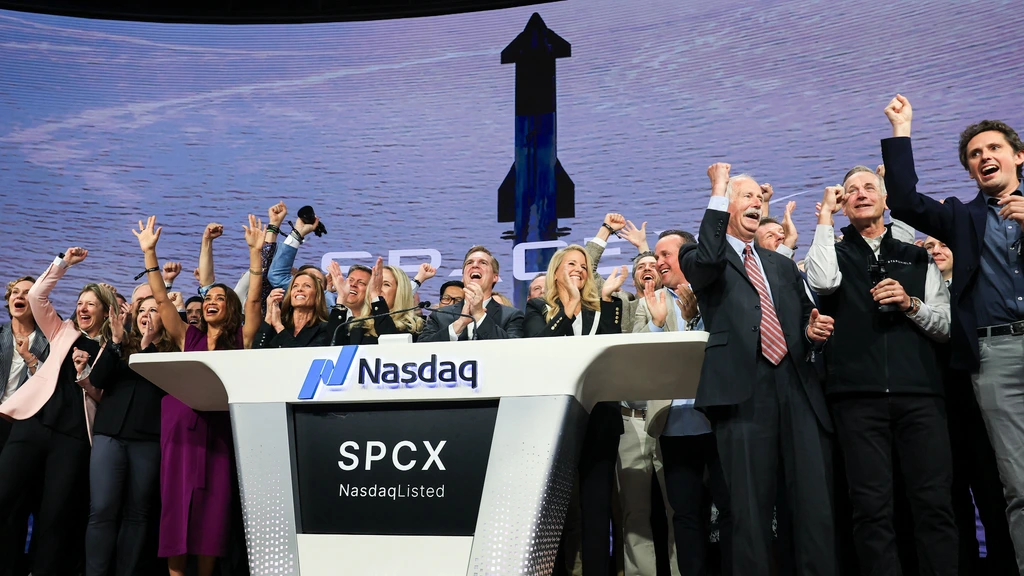
SpaceX's stock price has fallen below its initial public offering (IPO) price of $135 per share, meaning investors who bought shares during last month's IPO and are now selling are incurring losses. The stock briefly traded just above $135 in recent days but dipped to $133 for the first time. SpaceX, founded by Elon Musk, aims to facilitate travel to Mars and also operates the Starlink internet network, the social platform X, and the AI chatbot Grok. The company's IPO was the largest ever, raising $75 billion and initially propelling Musk to billionaire status with the stock soaring to $202. However, the price declined shortly after, and Musk lost his billionaire status within twelve days. SpaceX is not alone in facing market challenges; many other technology companies on US stock exchanges are also struggling. Investors are reportedly concerned about US interest rate policies and the rapid advancements in artificial intelligence, according to the Financial Times. Despite these market headwinds, SpaceX was recently added to the Nasdaq 100 index, which comprises the 100 largest publicly traded non-financial companies, a process that typically takes months but occurred for SpaceX in just weeks.
The recent performance of SpaceX's stock, trading below its IPO price, reflects broader market anxieties impacting the technology sector. Investor concerns regarding US monetary policy and the accelerating pace of AI development are creating a more cautious investment environment. While SpaceX's ambitious long-term goals and diversified business lines, including Starlink and X, are significant, their current valuation is subject to the prevailing market sentiment and the perceived risks associated with high-growth tech companies. The rapid inclusion in the Nasdaq 100 suggests a recognition of SpaceX's market influence, yet its stock's volatility highlights the tension between its innovative potential and the immediate financial pressures faced by investors in the current economic climate. This situation underscores the challenges of valuing nascent technologies and ambitious ventures within dynamic market conditions, prompting a re-evaluation of growth expectations.
AI-generated to prompt reflection — not editorial opinion, not advice, not a statement of fact. How this works.