Spain Deploys Floating Barrier in Ceuta After Deadly Migrant Rush
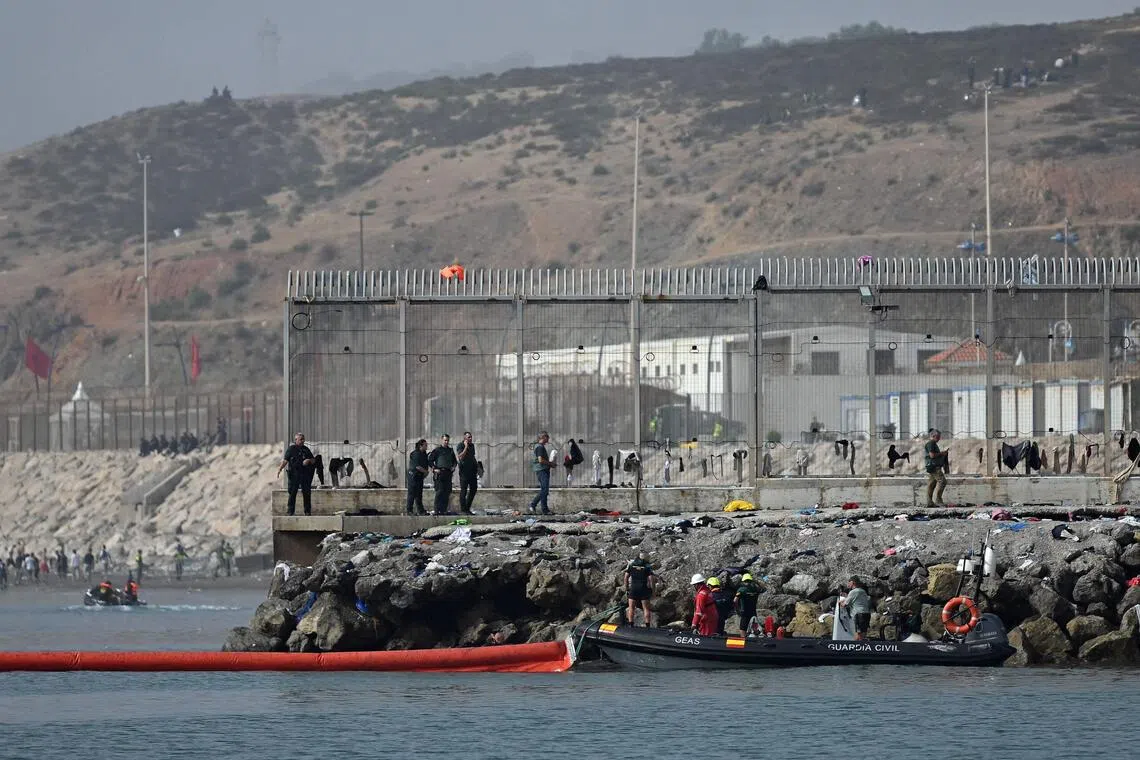
Spain has begun installing a 500-meter (1,640-foot) floating barrier off the coast of its North African enclave of Ceuta on Saturday. This action follows a large-scale influx of migrants from Morocco that resulted in the deaths of at least 67 people. Authorities reported that migrant crossings into Ceuta had ceased overnight. The installation of the barrier aims to prevent further unauthorized entries into the Spanish territory. The situation underscores the ongoing challenges faced by Spain and other European nations in managing irregular migration flows from Africa. The tragic loss of life highlights the perilous journeys undertaken by migrants seeking to reach Europe. The floating barrier is a new measure intended to bolster border security in the strategically important enclave.
The deployment of a floating barrier by Spain in Ceuta represents a physical response to escalating migration pressures, aiming to deter irregular entry. This measure, while potentially effective in the short term for border control, raises questions about long-term migration management strategies and humanitarian considerations. The incident, marked by significant loss of life, underscores the complex geopolitical and socio-economic factors driving migration from North Africa to Europe. Future policy discussions may need to address root causes and explore more sustainable, rights-respecting solutions beyond immediate containment, considering the evolving landscape of global mobility in the coming decade.
AI-generated to prompt reflection — not editorial opinion, not advice, not a statement of fact. How this works.