Spain Deploys Floating Barrier in Ceuta to Deter Migrant Crossings
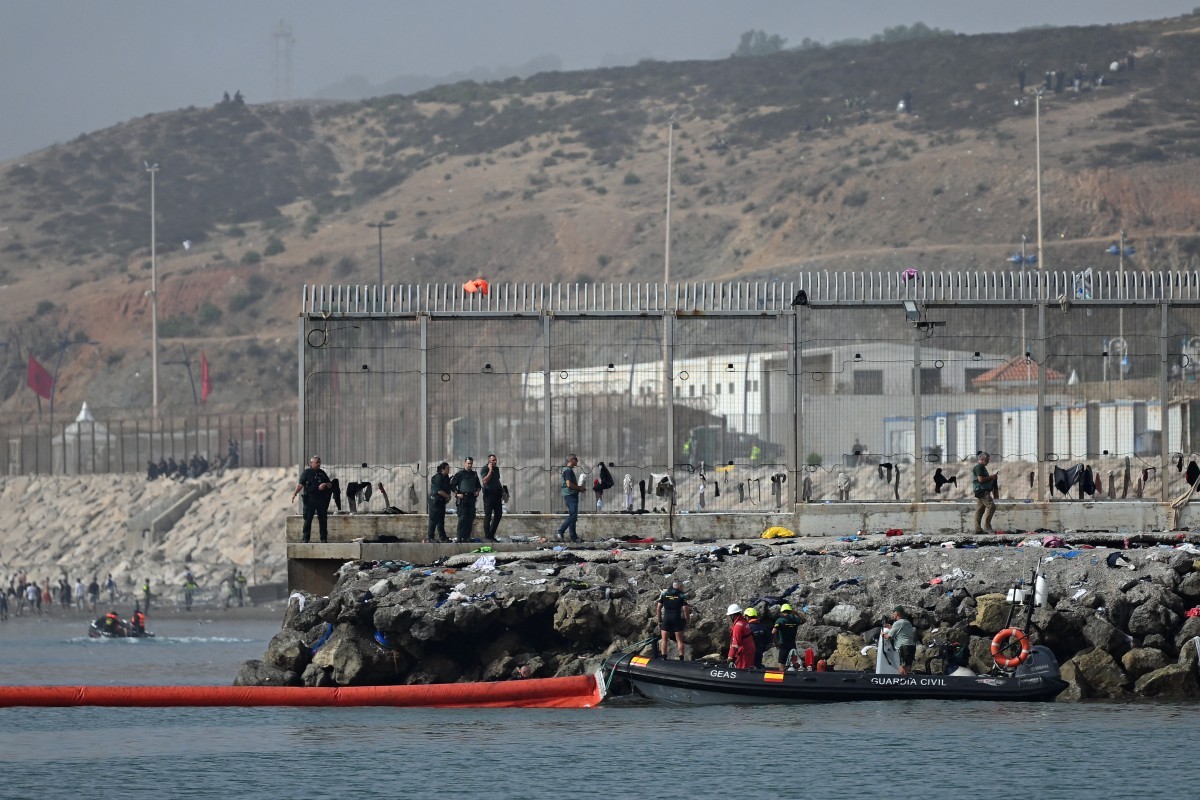
Spain has installed an inflatable maritime barrier off the coast of Ceuta, its autonomous city in North Africa, to prevent further unauthorized arrivals. The Spanish Interior Minister, Fernando Grande-Marlaska, stated that the situation in Ceuta is nearly normalized, with over 48,000 of the estimated 50,000 individuals who entered since Thursday, May 30th, having returned to Morocco. Tragically, the death toll associated with this large influx has risen to at least 67. Spanish Civil Guard agents are deploying a 500-meter floating barrier, designed to sit between 30 centimeters and one meter below the water's surface, with an integrated channel for patrol boats. Spanish police and soldiers have been escorting migrants back to the Moroccan border, with some individuals found hiding in tunnels on Tarajal beach being apprehended. Many migrants cited economic hardship and misinformation on social media as motivations for their journey, expressing disappointment with the lack of opportunities and hostile reception in Ceuta. Brahim Karroubi lamented the high cost of living, while 27-year-old Mohamed noted closed shops and hunger. Residents of Ceuta, though relieved by the return to normalcy, expressed lingering insecurity following the unprecedented arrival of thousands in under an hour, deeming it unacceptable and a potential warning of future attempts. Ceuta, along with Melilla, serves as a primary gateway for African migrants into the European Union, a status that fuels recurring diplomatic tensions with Morocco, which claims sovereignty over these territories.
The deployment of a physical barrier in the Strait of Gibraltar represents a state's response to managing sovereign borders amidst significant irregular migration flows. This action highlights the persistent challenge of balancing humanitarian concerns with national security and border control imperatives. The event underscores the complex interplay of economic disparities, geopolitical factors, and digital information dissemination in driving migration patterns. Future challenges will likely involve adapting border management strategies to evolving migration tactics and addressing the root causes of displacement to foster more sustainable solutions. The long-term efficacy of such physical deterrents in the face of determined migration efforts remains a critical question, potentially leading to increased risks for migrants attempting more perilous crossings.
AI-generated to prompt reflection — not editorial opinion, not advice, not a statement of fact. How this works.