Spain Dominates Argentina to Secure Second World Cup Title
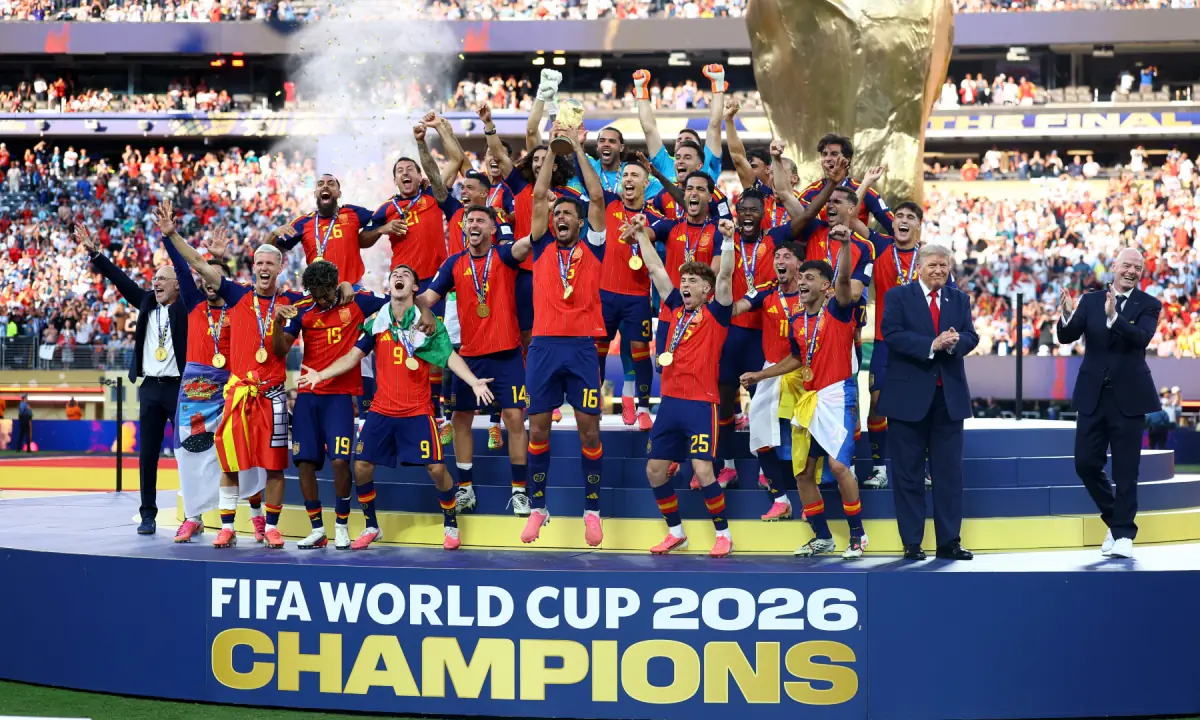
Spain clinched their second World Cup title by defeating defending champions Argentina 1-0 after extra time in the 2026 FIFA World Cup final held at the New York/New Jersey Stadium in East Rutherford, New Jersey, on July 19, 2026. The match was characterized by Spain's overwhelming control and tactical superiority, which significantly limited Argentina's opportunities and reduced Lionel Messi and Lautaro Martínez to isolated figures. Spain's midfield, anchored by Rodri and featuring the dynamic play of Pedri and Fabián Ruiz, dictated the tempo and consistently stretched Argentina's defense. This strategic dominance, described as an evolution of the Spanish footballing ideal, involved purposeful possession, aggressive pressing, and fluid ball circulation that left Argentina chasing shadows.
Argentina's midfield, led by Enzo Fernández, struggled to impose itself, culminating in Fernández's second-half red card. Despite Argentina's history of resilience and comebacks throughout the tournament, Spain's sustained pressure and organized play prevented them from establishing any meaningful rhythm. The decisive goal came in the 106th minute from Ferran Torres, a well-deserved reward for Spain's relentless dominance. The victory marked a significant moment, potentially signaling the end of Lionel Messi's World Cup journey while ushering in a new era for Spanish football, characterized by a blend of technical excellence and physical intensity from a younger generation of players.
The 2026 World Cup final showcased a strategic masterclass by Spain, highlighting the efficacy of sustained possession-based control against a team reliant on individual brilliance and resilience. Spain's victory underscores a potential shift in footballing philosophy, where cohesive team structure and tactical discipline can systematically neutralize even the most celebrated individual talents. This outcome prompts reflection on how teams adapt to evolving tactical landscapes, particularly in high-stakes matches where the ability to dictate tempo and deny opponents their preferred patterns of play becomes paramount. Looking ahead, this Spanish approach may influence future team development, emphasizing integrated systems over singular star power in the pursuit of major tournament success.
AI-generated to prompt reflection — not editorial opinion, not advice, not a statement of fact. How this works.