Spain Repels Migrant Influx in Ceuta, Installs Maritime Barrier
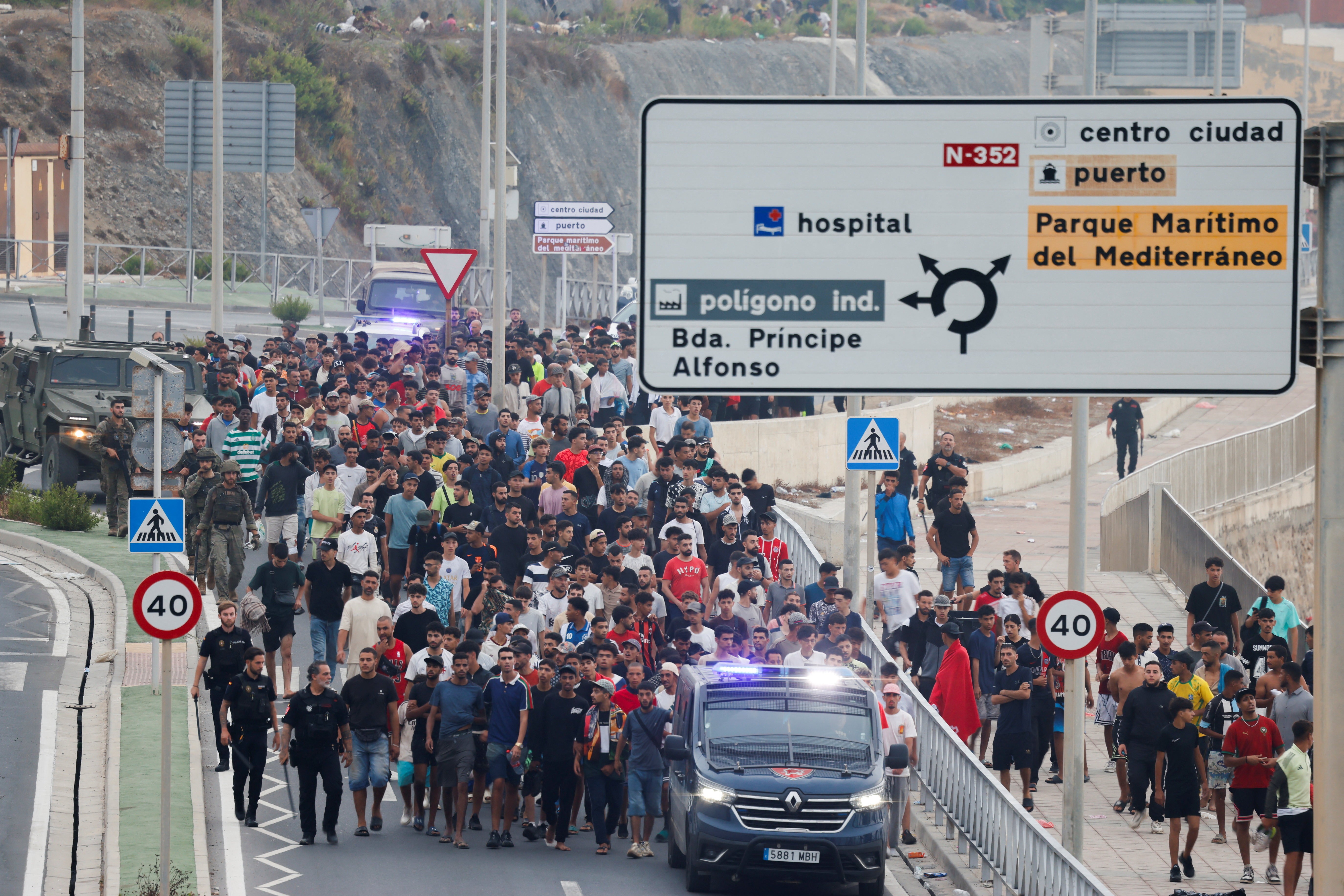
Spanish authorities have largely restored order in Ceuta, an autonomous Spanish city in North Africa, following a massive influx of over 50,000 migrants from Morocco since Thursday, May 30th. Over 48,000 individuals have since returned to Morocco, with Spanish police and soldiers escorting many to the border. Tragically, the death toll associated with this surge has risen to at least 67. Spanish Interior Minister Fernando Grande-Marlaska stated that the situation has almost completely reversed, with most migrants having left Ceuta. To prevent further sea arrivals, the Civil Guard has begun installing a 500-meter floating barrier, designed to extend both above and below the water's surface, with a channel for patrol boats. A Moroccan migrant described the dangerous crossing as a "not good experience" and pleaded with others not to attempt it, citing lack of food, sleep, and the loss of lives. Prime Minister Pedro Sánchez announced that authorities are informing migrants about open borders for those wishing to return voluntarily. Ceuta, bordering Morocco, is a key entry point into the European Union for many seeking to regularize their status. The city's reception centers were already near capacity before this latest wave, which primarily consisted of young Moroccan men, families, and children.
The event highlights the persistent challenge of managing irregular migration flows at the EU's external borders, particularly in geographically complex enclaves like Ceuta. Spain's response, involving border reinforcement and maritime barriers, reflects a strategy to deter immediate arrivals and regain control. However, such measures often redirect migratory pressures rather than resolve underlying causes, potentially increasing risks for migrants attempting more perilous routes. The situation underscores the tension between national sovereignty, humanitarian concerns, and the EU's broader migration policies. Future policy considerations might involve enhanced regional cooperation, addressing root causes of migration in origin countries, and establishing more efficient, legal pathways for asylum seekers and economic migrants to mitigate the humanitarian toll and security challenges.
AI-generated to prompt reflection — not editorial opinion, not advice, not a statement of fact. How this works.