Spain's A400M firefighting kits: Prototypes exist, but operational deployment remains uncertain
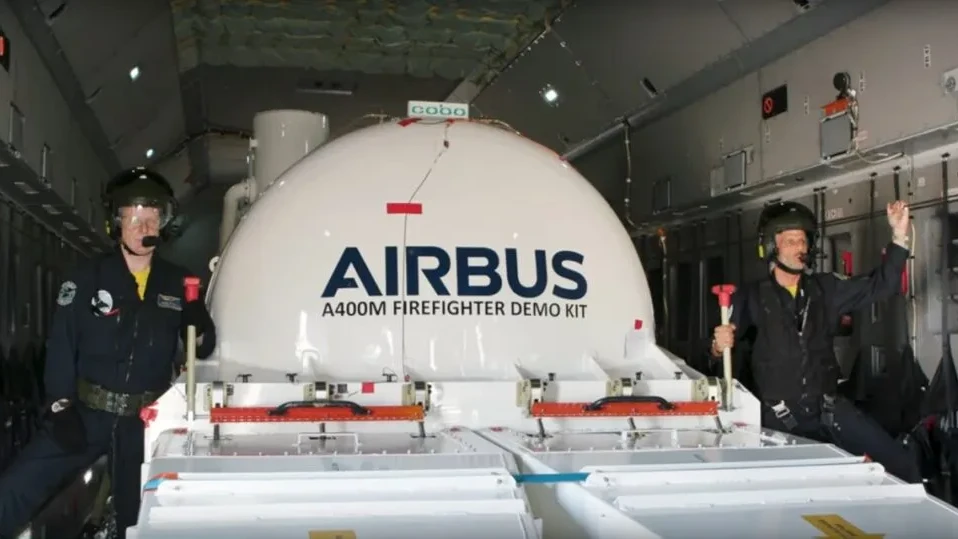
Spanish Prime Minister Pedro Sánchez recently announced that the Air Force and Space would install firefighting kits on its Airbus A400M aircraft, seemingly implying readiness for the current summer campaign against forest fires. While the concept of equipping these planes for aerial firefighting is a valuable one, especially given the increasing need for such resources, the kits are not yet operational. Sources indicate that only two prototypes of the kit have been developed. One prototype will serve as the basis for certifying the kit for flight operations, but the process for mass production is still pending. The production run is expected to be relatively small, as not every A400M aircraft, either in Spain or in other operating countries, will be equipped. Furthermore, training for flight crews and ground personnel to operate the system needs to be completed. The kit itself is a container that fits into the aircraft's cargo bay without requiring modifications. It is designed to carry 20,000 liters of water with retardant, which can be released by gravity. Unlike dedicated water bombers, the A400M would need to land to refill its tank, a process estimated to take about ten minutes. A significant advantage, however, is the A400M's ability to operate from unpaved runways, potentially reducing turnaround time if water supplies can be brought closer to fire sites. The article also notes that Spain is proceeding with the purchase of seven De Havilland DHC-515 aircraft, a modern version of the Canadair planes, though delivery dates are also unspecified.
The announcement regarding the Airbus A400M firefighting kits highlights a common challenge in defense procurement and technological deployment: the gap between initial announcements and operational readiness. While the intention to enhance aerial firefighting capabilities is commendable, the reliance on prototypes and the unspecified timeline for mass production and crew training suggest a potential disconnect between political communication and practical implementation. This situation underscores the importance of transparent reporting on development stages and realistic deployment schedules. Future strategies could benefit from integrating phased rollouts and robust contingency planning to ensure that announced capabilities are matched by tangible operational capacity, particularly for critical public services like wildfire suppression. The long-term effectiveness will depend on sustained investment in both technology and human capital, alongside clear communication of progress.
AI-generated to prompt reflection — not editorial opinion, not advice, not a statement of fact. How this works.