Spain's African Enclaves Face Mass Migrant Influx from Morocco
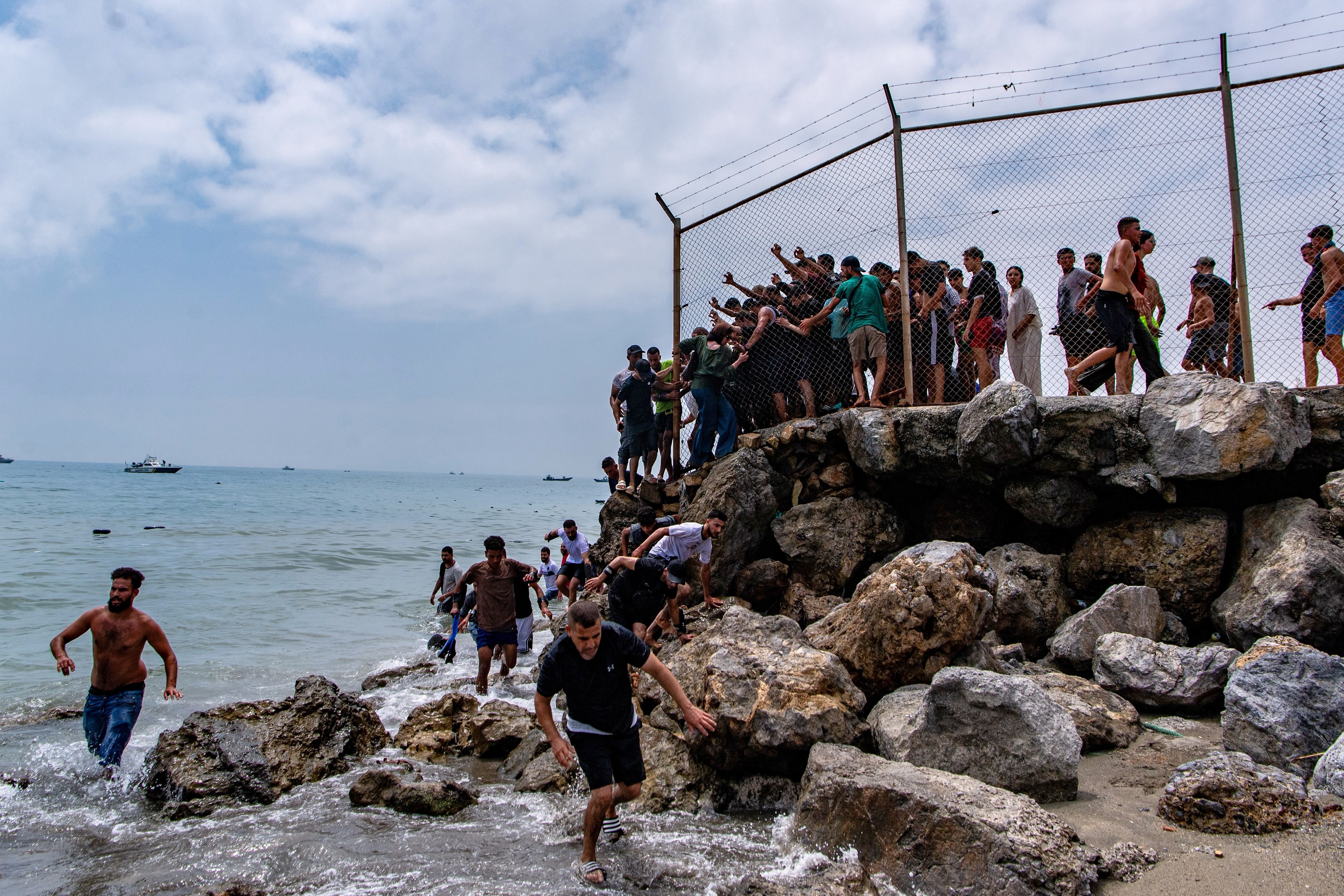
Spain experienced a significant surge in migrant arrivals on Thursday, May 30th, with two autonomous cities in North Africa, Ceuta and Melilla, being targeted. In Ceuta, an estimated 3,000 migrants, primarily young men from Morocco, arrived by swimming. Tragically, ten individuals lost their lives during this perilous crossing. Videos depicted large groups swimming with the aid of buoys or being rescued by the Spanish Coast Guard, with some migrants requiring medical attention upon arrival. Spanish Civil Guard officers were overwhelmed by the sheer number of arrivals, opting to escort rather than prevent entry. This influx follows a recent trend, with over 1,500 migrants having reached Ceuta in the preceding week, straining the city's reception center which was already operating beyond capacity. In response to the crisis in Ceuta, the Spanish government deployed 60 military personnel to bolster police efforts in managing the migrant flow. Hours after the events in Ceuta, authorities closed the Beni Enzar border crossing in Melilla following a separate attempt at mass entry. Spanish security forces intervened to prevent a large group from crossing, with reports of shots fired in the vicinity, though no injuries were confirmed. Social media showed images of vehicles on fire on the Moroccan side of the border and individuals running towards Melilla. The Civil Guard reinforced policing along the southern dike marking the border and restricted access for security reasons, urging the public to stay clear.
The dual migrant surges into Spain's North African enclaves highlight the complex interplay of geopolitical factors, economic disparities, and humanitarian challenges at Europe's southern border. The overwhelming numbers suggest a coordinated or highly motivated movement, potentially driven by deteriorating conditions in migrant-origin countries or shifting transit routes. Spain's response, involving both military reinforcement and border closures, reflects the difficult balance between national security, humanitarian obligations, and the strain on local resources. Future policy will likely grapple with addressing root causes of migration, enhancing border management technologies, and fostering regional cooperation, all within the evolving framework of international migration law and the EU's external border policies. The events underscore the persistent pressure on European borders and the need for sustainable, long-term solutions that consider both security and human rights.
AI-generated to prompt reflection — not editorial opinion, not advice, not a statement of fact. How this works.