Spain's Lost Andalusian Era: A Legacy of Knowledge and Culture
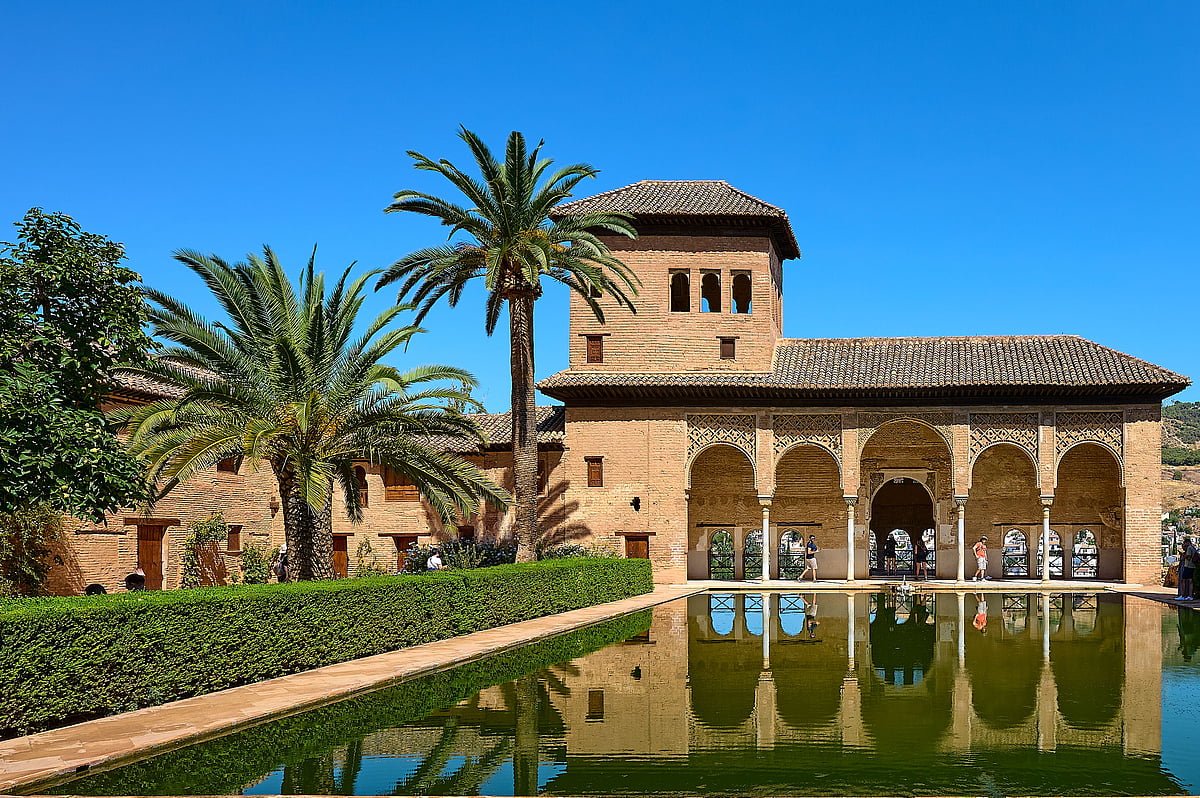
The Muslim rule in Spain, known as Al-Andalus, spanned nearly eight centuries from 711 to 1492 CE, leaving an indelible mark on civilization. This period is considered one of the most brilliant chapters in human history, profoundly influencing not only Europe but the entire world through its advancements in knowledge, science, literature, art, and culture. The arrival of Muslims in Spain began in 711 CE when Tariq ibn Ziyad led approximately seven thousand troops across the Strait of Gibraltar, a passage later named in his honor. They quickly conquered key cities like Cordoba, Toledo, and Seville, ending the Visigothic rule.
In 756 CE, Abd al-Rahman I established an independent Umayyad Emirate in Andalusia, and his descendant Abd al-Rahman III declared himself Caliph in 929 CE, transforming Cordoba into a powerful capital of the Islamic world. Cordoba flourished as a global center for education, medicine, philosophy, mathematics, and astronomy, boasting libraries with hundreds of thousands of books, far exceeding those in Europe at the time. Scholars from Muslim, Christian, and Jewish faiths collaborated, producing luminaries such as Averroes, Abulcasis (the father of surgery), Ibn Hazm, and Abbas ibn Firnas. The architectural marvels of the Great Mosque of Cordoba, the Alhambra Palace, and the Giralda Tower in Seville stand as testaments to Islamic art, calligraphy, geometric design, and engineering prowess. The Muslims also enriched Spain economically through advanced irrigation, agricultural techniques, and urban planning, fostering a multi-cultural society with religious tolerance.
However, internal political divisions and conflicts gradually weakened Muslim rule, leading to its fragmentation into smaller states after the fall of the Umayyad Caliphate. This disunity allowed the Christian kingdoms of northern Spain to launch the Reconquista, gradually reclaiming territories. The final Muslim stronghold, Granada, fell on January 2, 1492, to Ferdinand and Isabella, marking the end of Muslim governance. The subsequent period saw severe persecution, forced conversions, and the expulsion of hundreds of thousands of Muslims. Despite the political end, the intellectual and cultural legacy of Al-Andalus played a crucial role in the European Renaissance, with the translation of Arabic texts into Latin opening new avenues of knowledge. The history of Al-Andalus serves as a profound lesson on the power of combining faith, knowledge, justice, and creativity, demonstrating how a nation can achieve leadership and contribute to human civilization, while also highlighting the dangers of political division and internal conflict.
The historical narrative of Al-Andalus highlights the profound impact of knowledge exchange and cultural synthesis on societal advancement. The period demonstrates how intellectual collaboration across diverse religious and ethnic groups can foster unprecedented innovation in science, arts, and governance. The eventual decline underscores the systemic vulnerability that arises from internal political fragmentation and the erosion of unifying principles, irrespective of external pressures. Examining this history through a contemporary lens reveals enduring lessons about the societal benefits of inclusive intellectual environments and the critical importance of robust internal cohesion for sustained prosperity and influence in an increasingly interconnected world. The legacy of Al-Andalus offers a powerful case study for understanding the long-term consequences of both intellectual openness and political division on civilizational trajectories.
AI-generated to prompt reflection — not editorial opinion, not advice, not a statement of fact. How this works.