Spain's Migrant Crisis: Political Storm Fueled by Social Media
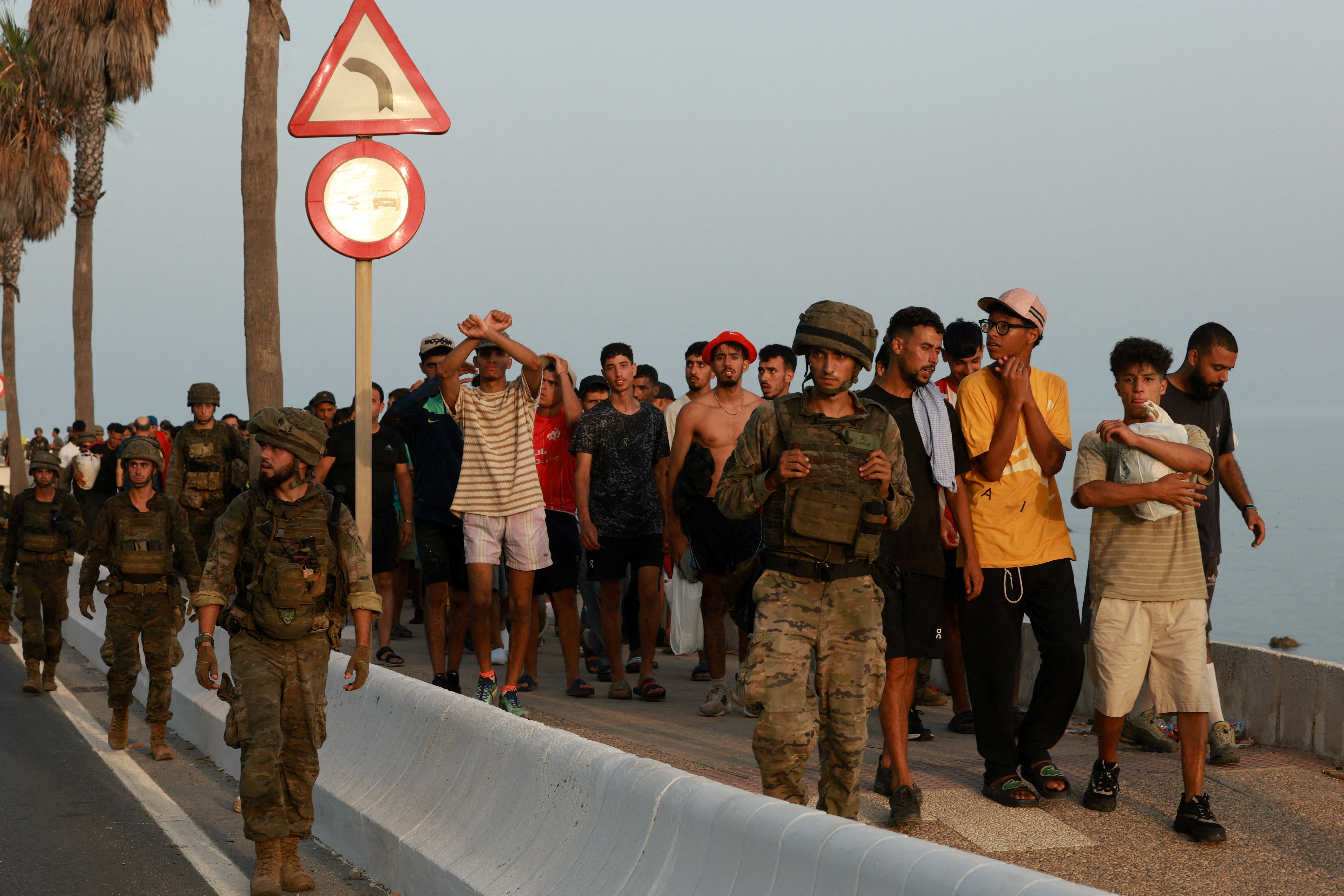
Tens of thousands of migrants swam to the Spanish enclave of Ceuta from Morocco in a recent mass crossing, overwhelming Spanish and Moroccan border forces. While most migrants have since been returned to Morocco, escorted by Spanish soldiers and police, the event left at least 72 dead, with bodies found floating at sea. This influx has reignited political divisions across Europe regarding migration, a highly sensitive issue on the continent. Questions linger about the sudden surge: whether it was triggered by viral social media posts promising an easy route to Europe or a more premeditated action.
Spanish Prime Minister Pedro Sánchez criticized some EU members, particularly Italy, for politicizing the crisis instead of offering support. Italy's far-right party, Fratelli d'Italia, led by Giorgia Meloni, used images of the arrivals to criticize Sánchez's policies, leading Meloni to suspend the Schengen agreement between Italy and Spain, citing security concerns. Spain, however, argued that Ceuta is not part of the Schengen zone and that the situation was under control. Meloni's actions are seen as a political move to gain votes ahead of upcoming elections, as her party faces competition from a new anti-immigration party.
Other EU nations also view Spain as lenient on immigration, with many supporting Italy's call for an urgent meeting of EU Interior Ministers to discuss policies that attract migrants. Spain's policy of allowing undocumented immigrants to apply for residency and work permits is cited as an example, though the government defends it as pragmatic due to Spain's aging population. Sánchez attributes the recent surge to a Spanish Supreme Court ruling that prevents immediate expulsion of sea arrivals, arguing that human traffickers distorted this information to promise an easy path. However, many migrants reported seeing social media posts promising an open Spain, with some accounts gaining tens of thousands of likes. These promises proved false, as many migrants found themselves without food or shelter in Ceuta and were subsequently returned to Morocco. The situation has drawn comparisons to the migrant crisis at the Belarus border, with speculation about who might be benefiting from the chaos, including global right-wing movements and Russia, while Morocco officially blames criminal organizations.
The influx of migrants into Ceuta, amplified by social media, highlights the complex interplay between migration policy, geopolitical incentives, and digital communication. The event underscores how border control challenges can be exacerbated by the rapid dissemination of information, whether accurate or misleading, across platforms. Political actors, facing electoral pressures, may leverage such events to advance nationalistic agendas, potentially straining international cooperation and exacerbating existing tensions between nations. Future policy discussions will likely need to address not only border security and humanitarian concerns but also the role of digital platforms in shaping migration flows and public perception, considering the long-term demographic and societal implications for aging European nations.
AI-generated to prompt reflection — not editorial opinion, not advice, not a statement of fact. How this works.
