Spain's World Cup Champions Return Home to Massive Celebrations
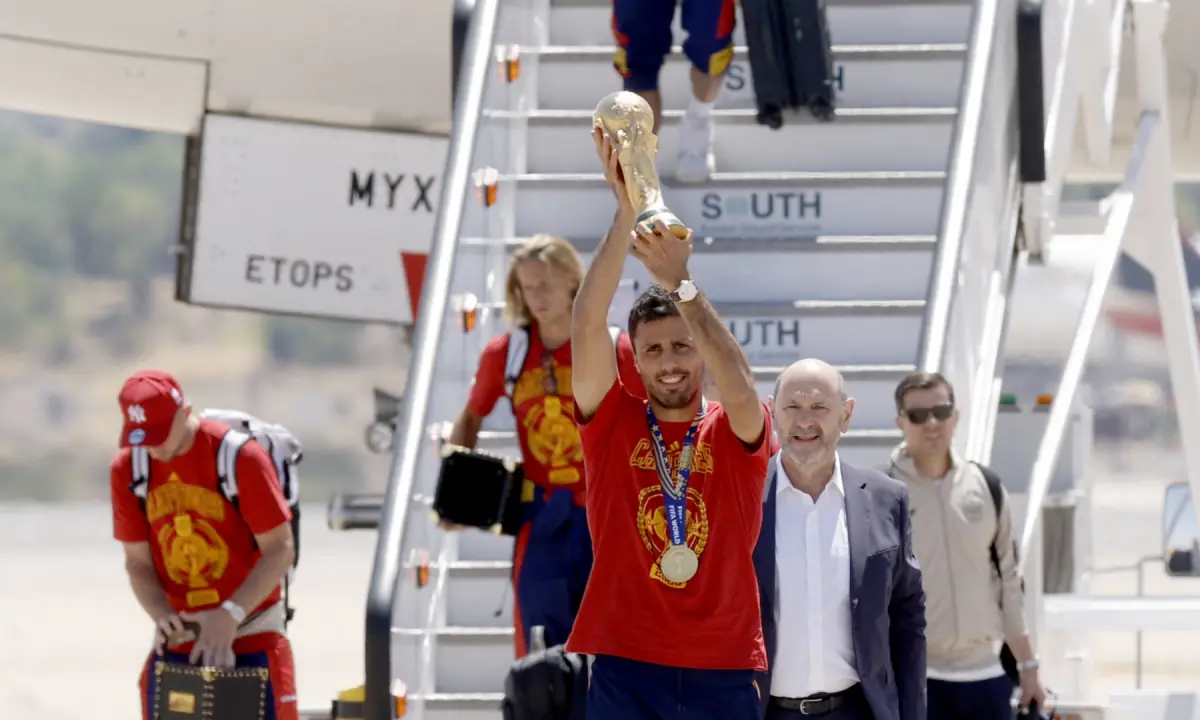
Spain's FIFA World Cup champions have returned to Madrid following their victory over Argentina in New Jersey. The team, captained by Rodri, secured their second World Cup title with a 1-0 win in extra-time, thanks to a goal from Ferran Torres. This triumph marks Spain's first World Cup win since 2010, sparking widespread national pride and celebrations across the country. Madrid's main avenue, the Castellana, showed signs of the previous night's revelry, with cleaning crews working to prepare for an anticipated million-strong crowd for the victory parade. The players are scheduled to be received by King Felipe VI at Zarzuela Palace and then by Prime Minister Pedro Sanchez at La Moncloa. An open-top bus parade will proceed from Moncloa to Cibeles square, where a ceremony will be held. This victory is particularly significant as Spain's women's team also won the World Cup in 2023, making them the current holders of both titles. Notably, seismic sensors across Spain detected vibrations from fan celebrations after Torres' winning goal, an phenomenon also observed during Spain's Euro 2024 win. Tragically, a 13-year-old boy died in Ciudad Rodrigo after a fountain collapsed under celebrating supporters. Meanwhile, Argentina's fans are preparing to welcome their team home after their World Cup hopes were dashed in the final.
The jubilant reception for Spain's World Cup champions highlights the powerful unifying force of national sporting success. The detection of fan celebrations by seismic sensors underscores the intense emotional and physical energy generated by such events, demonstrating how collective human activity can register on scientific instruments. While celebrating victory, the tragic incident involving the fountain collapse serves as a stark reminder of the need for robust public safety measures during large-scale public gatherings. The dual possession of the men's and women's World Cup trophies by Spain also points towards a potential shift in global sports dynamics, with sustained excellence across genders becoming a marker of national sporting prowess. Looking ahead, Spain's role as a co-host for the 2030 World Cup, coupled with this recent triumph, positions them as a significant player in the future landscape of international football.
AI-generated to prompt reflection — not editorial opinion, not advice, not a statement of fact. How this works.