Spanish National Football Team Reflects Spain's Diverse Cultural and Regional Identities
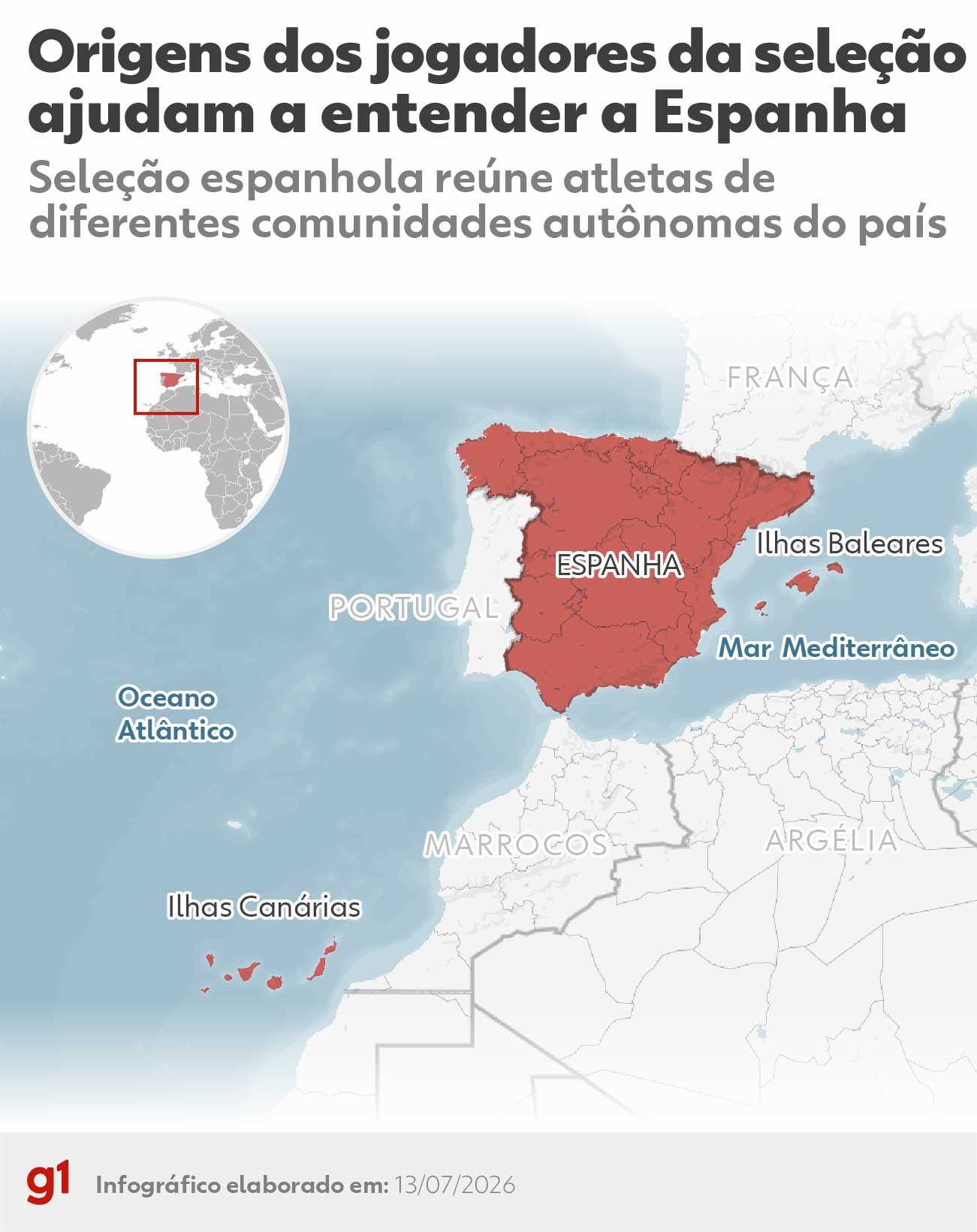
The Spanish national football team, currently competing in the World Cup semifinals, serves as a microcosm of Spain's rich cultural and regional diversity. Spain is organized into 17 Autonomous Communities and 2 autonomous cities, each with distinct histories, languages, and cultural traditions, and some with separatist movements. While Castilian Spanish is the official language, others like Catalan, Galician, Basque, and Valencian are co-official in their respective regions.
Players like Lamine Yamal, born in the Barcelona metropolitan area, represent Catalonia, a region known for its strong cultural identity, economic significance, and historical separatist movement. Yamal's background also highlights Spain's increasing immigrant population, which has been a key driver of population growth, with significant numbers of Colombians, Moroccans, and Venezuelans arriving. Rodri, a team leader, hails from Madrid, the political and administrative heart of Spain, which is associated with central power, unlike more autonomous regions. Fabián Ruiz comes from Andalusia, the most populous autonomous community in southern Spain, characterized by its flamenco culture, Arab legacy, and historical sites.
Pedri and Yéremy Pino represent the Canary Islands, an archipelago with a unique blend of indigenous, Spanish, African, and Latin American influences, known for its tourism and vibrant carnivals. Borja Iglesias is from Galicia in northwestern Spain, a region with a language similar to Portuguese and cultural ties to northern Portugal. Nico Williams, while born in Navarra, is linked to Basque culture, known for its unique identity and traditions like the San Fermín festival in Pamplona. The team's composition thus mirrors the complex tapestry of identities within Spain.
The Spanish national football team's diverse origins offer a compelling lens through which to view Spain's internal regional dynamics and cultural pluralism. The team's composition, featuring players from Catalonia, Madrid, Andalusia, the Canary Islands, Galicia, and the Basque region, implicitly showcases the Spanish state's complex governance structure, balancing central authority with significant regional autonomy. This diversity within a single national team can be seen as a powerful, albeit informal, mechanism for fostering national cohesion by celebrating distinct identities under a shared banner. However, it also underscores the persistent cultural and linguistic differences that shape regional politics and national identity debates, highlighting the ongoing challenge of integrating diverse autonomies within a unified state framework.
AI-generated to prompt reflection — not editorial opinion, not advice, not a statement of fact. How this works.