Spanish PM: Ceuta situation a violation of territorial integrity amid migrant surge
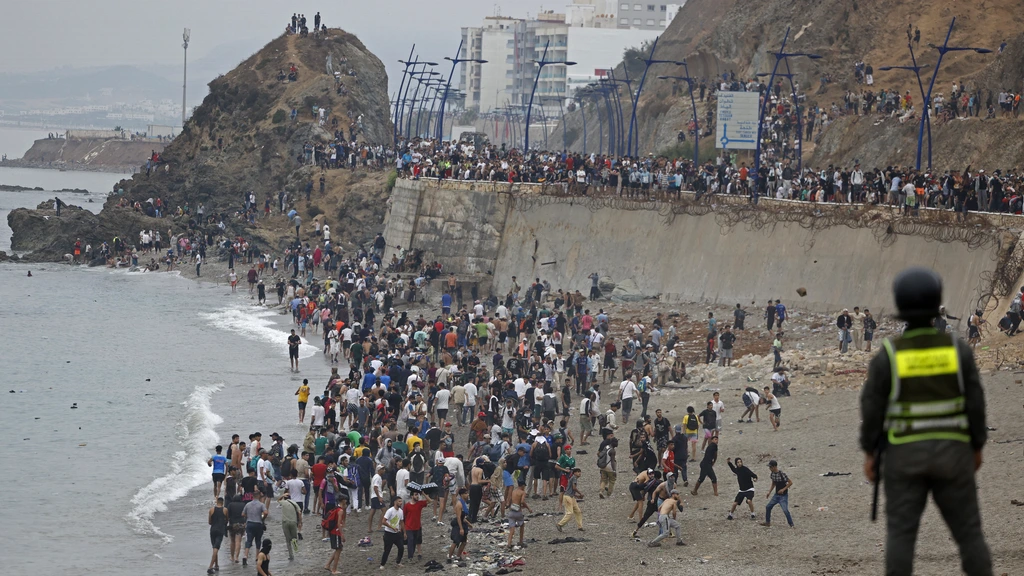
Spanish Prime Minister Sánchez declared the recent events in Ceuta, a Spanish exclave in Morocco, a "violation of Spain's territorial integrity" and an "attack." He arrived in Ceuta following a massive influx of migrants, which he attributed to human smugglers. The Spanish government estimates that nearly 50,000 migrants arrived in the exclave in recent days, though the regional president and mayor of Ceuta, Juan Jesús Vivas, places the figure closer to 60,000. Official registration numbers vary, with the Interior Ministry reporting approximately 25,000 individuals have already returned to Morocco. Migrants reached Ceuta by swimming, boat, or climbing fences. The leader of the exclave reported that 34 people died during the journey. Ceuta, with a population of over 80,000, is considered by migrants a gateway to the European Union. The situation has prompted concern across Europe, with France ordering intensified border controls with Spain and offering assistance. Italy's Prime Minister Meloni suggested suspending the Schengen Agreement concerning Spain, a sentiment echoed by Finland's Foreign Minister. Spain reacted with indignation, summoning the Italian ambassador. European Commission President Von der Leyen stated the EU is in contact with Morocco and called the scenes in Ceuta "unacceptable," emphasizing that irregular entry into the Union will not be permitted. Spain has deployed nearly 350 police officers and military personnel to Ceuta.
The crisis in Ceuta highlights the complex interplay between national sovereignty, migration management, and international agreements like the Schengen Convention. The surge in arrivals tests the limits of border control and humanitarian response, particularly for enclaves like Ceuta which face unique logistical challenges. The differing estimates of migrant numbers and returns underscore the difficulties in accurately tracking population movements during such events. European nations' reactions, ranging from calls for border control reinforcement to suggestions of treaty suspension, reveal underlying tensions regarding shared responsibility for external border security and the practicalities of implementing EU-wide migration policies. The situation necessitates a coordinated approach, balancing territorial integrity with the humanitarian needs of migrants and the operational integrity of open-border agreements, while also addressing the root causes of irregular migration.
AI-generated to prompt reflection — not editorial opinion, not advice, not a statement of fact. How this works.