Spanish Wildfire Claims 11 Lives as Evacuation Routes Become Fatal Traps
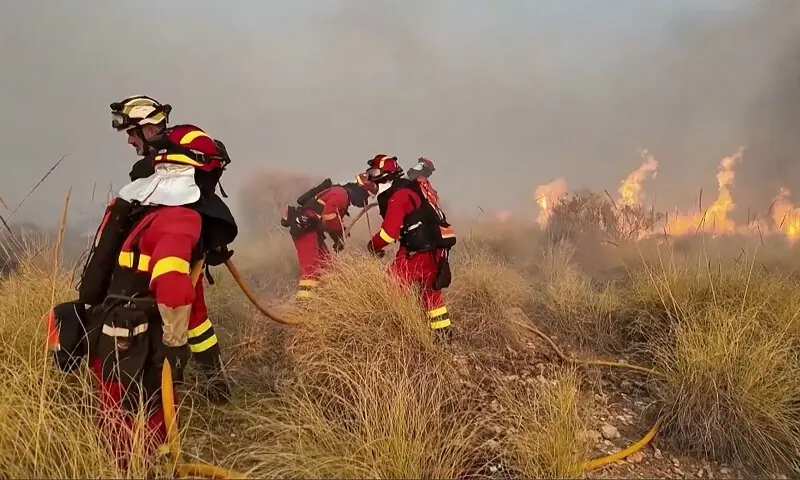
A devastating wildfire in southern Spain's Andalusia region has resulted in the deaths of 11 people, with 19 others still missing as of Friday. The fires, which raged near the rural villages of Los Gallardos and Bedar in Almeria province, forced panicked residents to flee their homes. Tragically, some evacuation routes turned into deadly traps, leading to the loss of life. Authorities confirmed that four individuals, believed to be British based on their vehicle's steering wheel, died inside one car. Seven other victims were found dead after apparently abandoning their vehicles to attempt escape on foot. Ten of the deceased are foreign nationals, with one Spanish fatality confirmed. Residents of Bedar were initially instructed to shelter in place, a decision that ultimately saved many lives as the flames did not reach most of the village. However, others who chose to evacuate, sometimes on their own initiative, faced perilous conditions. One resident described leaving their home due to heavy smoke, even though the fire was still some distance away. Another resident, Sonia, a British woman, stated that the main road from Bedar to Los Gallardos was impassable due to the fire. She explained that many people with homes in the mountains used alternative routes, some of which proved to be fatal. Regional officials emphasized the critical importance of following designated evacuation routes, noting that deviating from them could lead to dangerous situations, as tragically occurred in this instance.
This incident highlights the critical challenge of emergency response coordination during rapidly evolving natural disasters. The conflicting instructions to evacuate or shelter in place, coupled with the potential for misinformation or misjudgment regarding route safety, underscore the complex decision-making faced by both authorities and residents. Future preparedness strategies may benefit from enhanced real-time communication systems and more dynamic risk assessment models that can adapt to the unpredictable nature of wildfires. The tragedy also points to the need for robust public education campaigns on wildfire safety and evacuation protocols, emphasizing adherence to official guidance even when instinct suggests otherwise. Considering the increasing frequency and intensity of such events, a systems-level approach to disaster management, incorporating advanced predictive analytics and adaptive communication technologies, will be crucial for mitigating future loss of life and property.
AI-generated to prompt reflection — not editorial opinion, not advice, not a statement of fact. How this works.