SPARO Secures Hundreds of Millions in Funding for Aerial Intelligence
SPARO (Silicon Feather Technology), a startup focused on general aerial intelligence, has successfully completed four rounds of multi-hundred million yuan financing within six months. The funding rounds saw participation from investors including Matrix Partners China, Jingshan Capital, Alibaba, Hony Capital, GLP Hidden Hill Capital, and Yunshi Capital, following an initial seed round led by Matrix Partners China. The company plans to utilize the funds to expand its team in key positions, accelerate the commercialization and scaled delivery of its product lines, and continuously iterate on its technology platform.
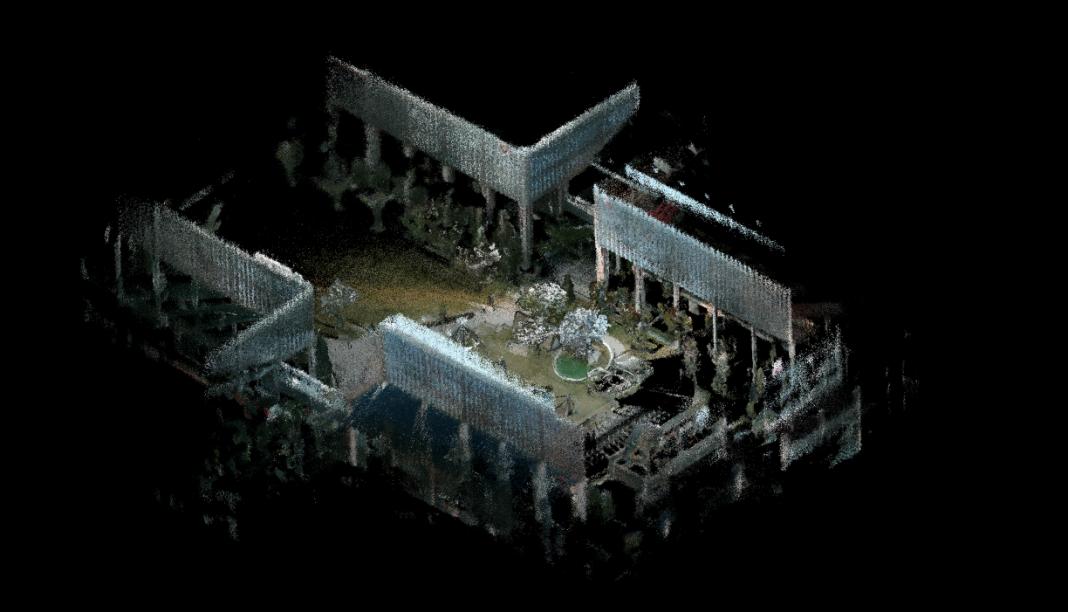
Founded in February 2026, SPARO aims to transform aircraft from traditional remote-controlled tools into intelligent aerial agents capable of understanding their environment, making decisions, and autonomously completing tasks. The core team comprises individuals from top global research institutions and leading companies like DJI and Huawei, bringing over a decade of experience in cutting-edge technology and industrialization. SPARO has developed a full-stack technology system encompassing multimodal perception, end-to-end cerebellum, world navigation model brain, and dexterous operation and cluster coordination. This enables aircraft to operate in complex environments lacking GPS signals, with low light, or dynamic changes, and to achieve cross-scenario, cross-platform, and cross-form applications.
Founder Zhang Fu, a distinguished scientist with extensive industry experience, including an eight-year tenure as a senior consultant scientist at DJI, highlights the industry's shift from engineering maturity and cost-effectiveness to autonomous capabilities. He emphasizes that true aerial intelligence requires not just observation but also intervention in the environment, a capability currently lacking in most drones. SPARO's technological advantage lies in its self-developed, full-stack architecture covering perception, cerebellum, brain, and data. This includes multimodal fusion perception for centimeter-level positioning without GPS, an end-to-end cerebellum for sub-5-millisecond obstacle avoidance, and a world navigation model brain for spatial understanding and prediction. The company is also developing capabilities for dexterous manipulation and large-scale cluster coordination, aiming for thousands of drones to operate collaboratively. SPARO has already secured dozens of initial customers and partners in its first six months.
SPARO's rapid fundraising highlights significant investor confidence in the burgeoning field of autonomous aerial systems, moving beyond traditional drone capabilities. The company's focus on complex environments and task execution, rather than just observation, addresses a critical gap in current drone technology. This strategic pivot from hardware-centric to intelligence-centric development aligns with broader trends in AI and robotics, where embodied intelligence is increasingly valued for its potential to perform tasks in inaccessible or hazardous locations. The challenge for SPARO, and the industry, will be translating advanced academic research into reliable, scalable commercial products, navigating the inherent constraints of aerial platforms (weight, power, size) while achieving sophisticated autonomy. The success of such ventures will depend on building robust ecosystems and demonstrating clear value propositions that justify the transition from human-controlled devices to intelligent, decision-making aerial agents.
AI-generated to prompt reflection — not editorial opinion, not advice, not a statement of fact. How this works.