SPD Candidate Opposes Nighttime Closure of Görlitzer Park Amid Drug Trade Concerns
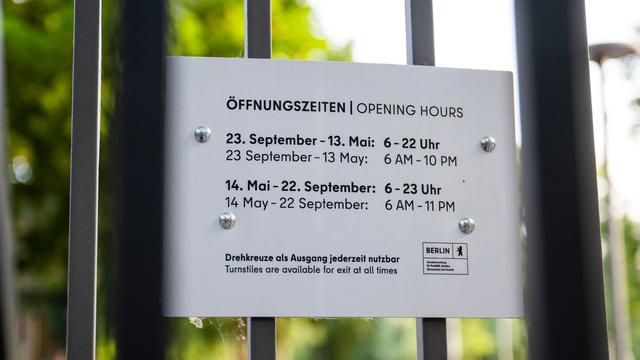
The SPD's top candidate for the Berlin state elections, Raed Saleh, has spoken out against the proposed nighttime closure of Görlitzer Park in Berlin's Kreuzberg district. Saleh stated that closing the park after dark would not solve the persistent problem of drug dealing. He believes that such a measure would merely displace the issue to other areas of the city, potentially creating new problems elsewhere. Saleh's position contrasts with calls from some local politicians and residents who have advocated for stricter measures to combat drug trafficking in the park. He argues that a more comprehensive approach is needed to address the root causes of drug-related crime and to ensure the safety and well-being of the park's visitors and surrounding community. The debate over how to manage Görlitzer Park, a known hub for open drug dealing, has been ongoing for years, with various solutions proposed and debated.
The debate surrounding Görlitzer Park highlights a common urban governance challenge: balancing public safety with open access and addressing complex social issues like drug use and dealing. While calls for immediate, visible solutions like park closures are understandable from a public perception standpoint, they often fail to address the underlying systemic factors. Such measures can lead to the 'balloon effect,' where problems are merely shifted rather than solved, potentially burdening other neighborhoods. Effective long-term strategies typically involve a multi-faceted approach, integrating law enforcement with social services, public health initiatives, and community engagement to reduce demand and offer support, rather than solely focusing on containment. Considering the evolving landscape of urban living and public space utilization in the coming decade, policy decisions will increasingly need to account for community well-being and the potential for unintended consequences of restrictive measures.
AI-generated to prompt reflection — not editorial opinion, not advice, not a statement of fact. How this works.
