Spindly Drone Achieves Near-Invisibility Through High-Speed Rotation
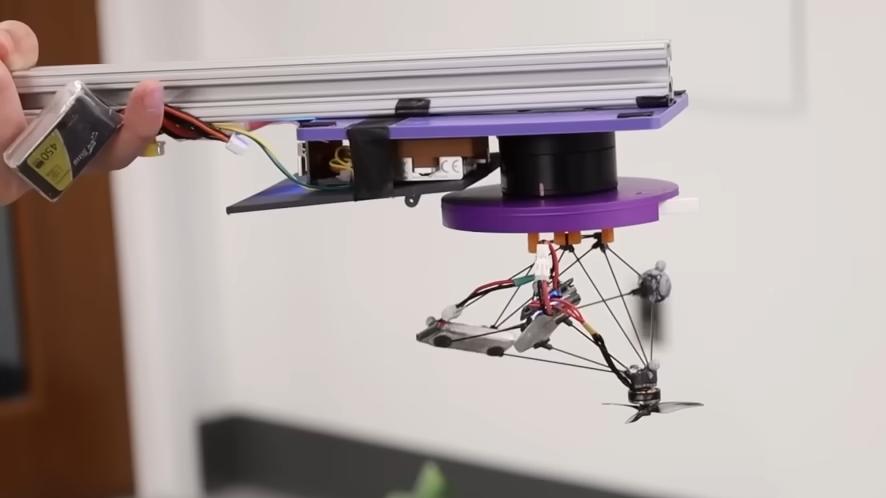
Researchers have discovered that a small drone with a spindly airframe can become nearly invisible when it spins at a high speed. This phenomenon was demonstrated with a specific spindly device. The exact mechanism behind this near-invisibility effect is not detailed in the provided snippet, but it suggests a novel application of rotational dynamics in stealth technology. Further details on the drone's design and the physics involved would be necessary to fully understand this breakthrough. The potential implications for surveillance, military applications, and even civilian uses are significant, depending on the scalability and practicality of the technology. This development opens new avenues for research in drone design and optical camouflage.
The reported near-invisibility of a high-speed spinning drone highlights an intriguing intersection of mechanical engineering and optical physics. This phenomenon could offer a novel approach to stealth, potentially circumventing traditional radar-absorbent materials or complex shaping. From a systems perspective, the energy expenditure required for such high-speed rotation versus the degree of stealth achieved would be a critical factor in its practical deployment. Future research may explore optimizing rotational speeds and airframe designs to maximize this effect while minimizing power consumption, potentially leading to new classes of reconnaissance or observational platforms.
AI-generated to prompt reflection — not editorial opinion, not advice, not a statement of fact. How this works.