Square Kilometre Array telescope poised to transform search for extraterrestrial life
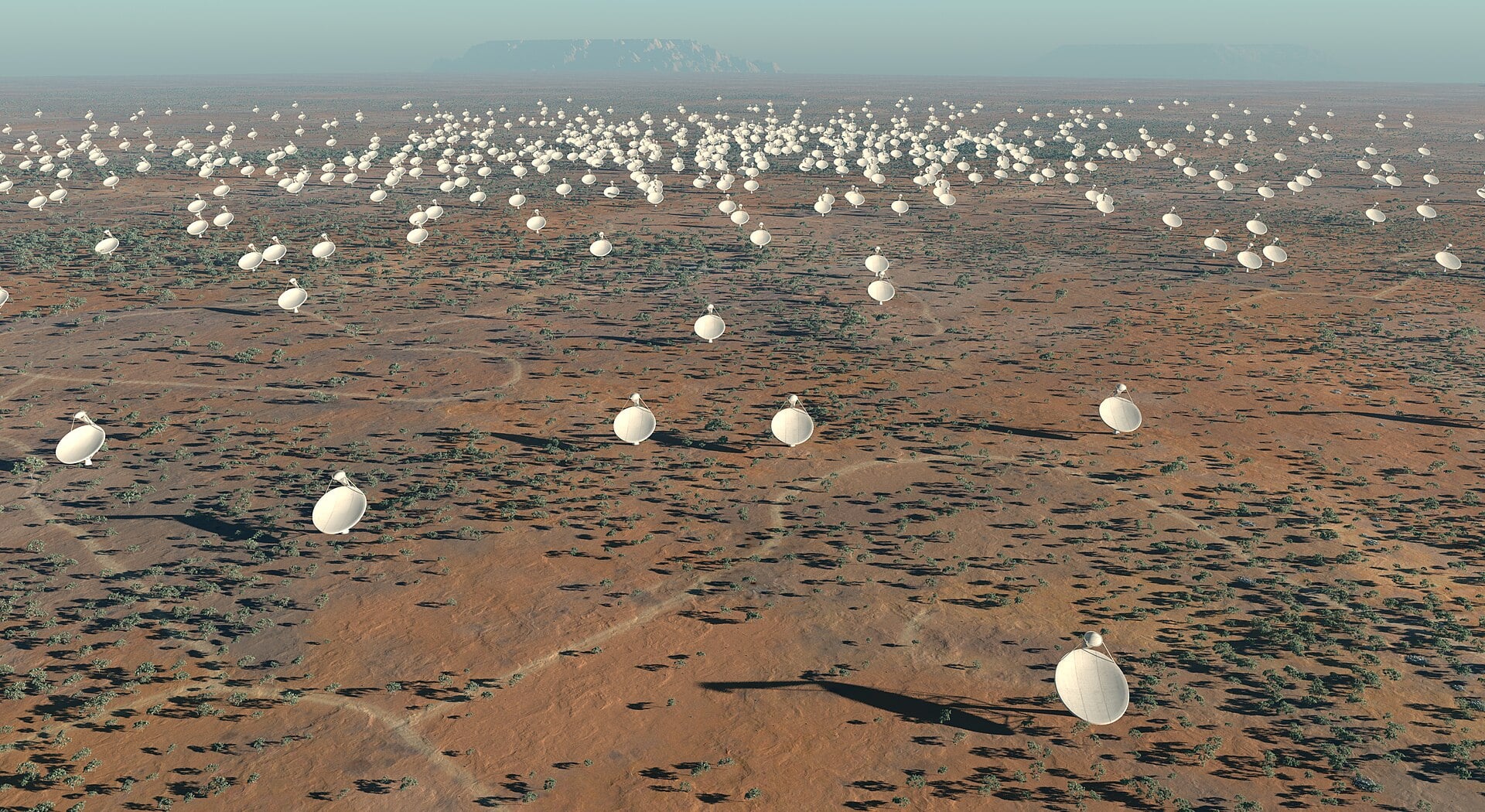
The Square Kilometre Array (SKA), a new generation radio telescope, is undergoing a multi-year deployment that astronomers anticipate will revolutionize the search for extraterrestrial life. This advanced technology promises unprecedented capabilities to observe the universe with greater clarity and reach than ever before. A recent book chapter authored by Dr. Chenoa Tremblay and colleagues outlines how the SKA's potential applications could contribute to answering the profound question of whether humanity is alone in the cosmos. The SKA's development represents a significant leap forward in astronomical observation, offering new avenues for scientific discovery. Its advanced instruments are expected to detect fainter signals and observe larger areas of the sky, increasing the probability of identifying potential biosignatures. This project underscores the ongoing quest to understand our place in the universe through technological innovation. The collaboration involved in the SKA project highlights the global effort in pushing the boundaries of scientific knowledge. Astronomers are eagerly awaiting the full operational capacity of the SKA to begin its ambitious scientific programs.
The development of the Square Kilometre Array (SKA) represents a significant investment in scientific infrastructure, driven by a fundamental human curiosity about life beyond Earth. The SKA's advanced capabilities, as detailed by Dr. Chenoa Tremblay and co-authors, are designed to push the limits of radio astronomy, potentially enabling the detection of signals previously beyond our reach. This endeavor highlights the interplay between technological advancement and the pursuit of profound scientific questions. The long-term implications of such projects extend beyond immediate discoveries, fostering international collaboration and inspiring future generations of scientists. As the SKA moves through its deployment phase, its success will depend on continued funding, technological integration, and the effective analysis of the vast datasets it will generate, shaping our understanding of the cosmos in the coming decades.
AI-generated to prompt reflection — not editorial opinion, not advice, not a statement of fact. How this works.