Sreemangal Eco-Resort Prioritizes Nature Over TVs, Invites Guests to Unplug
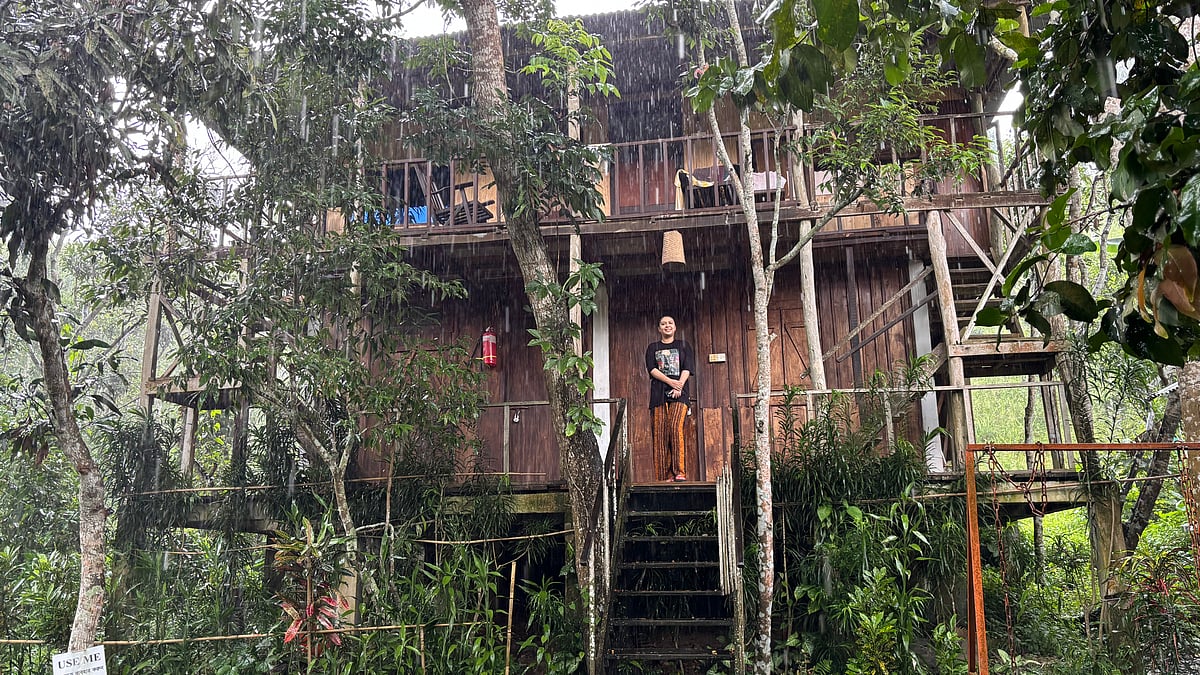
The author describes a visit to Shanti Bari Eco Resort in Sreemangal, Bangladesh, a place they have frequented for years and were recently invited to for the closing ceremony of a month-long 'June for Green' environmental program. The resort founder, Tanvir Arefin Lincoln, gathered various personalities, including writer and Antarctic explorer Mohua Rauf, 'Tree Friend' Azharul Islam Khan, and Mahfuz Russell of the Pitachara Forest and Wildlife Conservation Initiative. Despite arriving during a heatwave on June 26th, the author eagerly awaited the expected monsoon rains characteristic of the region. The anticipation was finally rewarded with a refreshing downpour, transforming the landscape and enhancing the natural ambiance. The author recounts the sensory experience of the rain, from the sound on the tin roof to the smell of the damp earth and the visual of water cascading down the hills. A unique aspect of Shanti Bari Eco Resort is its deliberate absence of televisions in any rooms, a philosophy championed by its founder. Lincoln aims to immerse guests in nature, encouraging them to connect with the environment rather than retreat to in-room entertainment. While air conditioning units were added to some rooms later to accommodate guest needs, the resort's primary allure remains its profound connection to the natural world, a vision recognized by The Economist in a 2014 report on Bangladesh tourism. The author finds solace and repeated attraction in the resort's wooden rooms, appreciating the founder's dream of guests engaging with nature's elements, like moonlight and shade, which continues to thrive.
This report highlights a hospitality business model intentionally designed to disconnect guests from digital distractions and reconnect them with nature. By omitting televisions, Shanti Bari Eco Resort actively encourages a slower pace and deeper engagement with the surrounding environment. This strategy leverages the growing consumer desire for authentic, restorative experiences, particularly in the face of increasing digital saturation. The resort's success, as noted by The Economist's past recognition, suggests a viable market niche for businesses prioritizing well-being and environmental immersion over conventional amenities. Looking ahead, such models may offer a sustainable alternative to traditional tourism, fostering both ecological appreciation and a reduction in energy consumption, aligning with broader societal shifts towards sustainability and mindful living in the coming decade.
AI-generated to prompt reflection — not editorial opinion, not advice, not a statement of fact. How this works.