Standing Forest Becomes Income Source for Producers in Rondônia
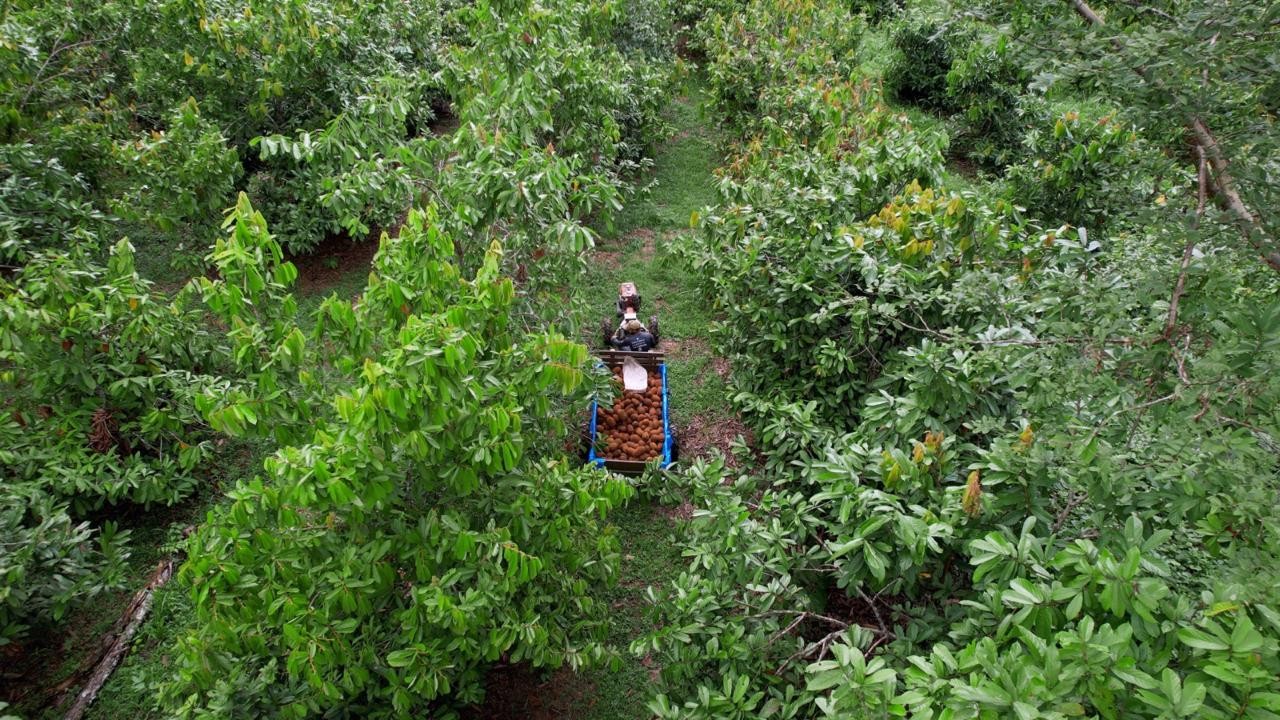
In Rondônia, Brazil, the RECA cooperative is pioneering an initiative where rural producers are financially compensated for preserving the standing forest, demonstrating that environmental conservation can be more profitable than deforestation. This program, implemented in the Nova Califórnia district of Porto Velho, aligns with a significant reduction in deforestation in the state, which saw an 86.2% decrease between 2021 and 2025. Producers generate income through two primary streams: selling forest products like cupuaçu and Brazil nuts, and earning carbon credits for forest conservation. These credits are purchased by Natura, a long-standing partner of RECA, to offset its own emissions. Natura remunerates producers based on the amount of carbon that would have been released had the forest been cleared, effectively paying for avoided deforestation. This initiative has already protected approximately 1,500 hectares of forest and prevented the emission of around 392,000 tons of CO2 equivalent. Natura aims for half of its carbon credits by 2030 to originate from Amazonian socio-biodiversity supply chains. Beyond environmental benefits, the project has significantly improved the livelihoods of participating families. A study by CEBRAP indicated that project participants have an average income 37% higher than non-participants. Furthermore, 25% of participants' children are pursuing higher education, compared to only 4% in a control group, highlighting improved access to education and overall quality of life, including increased savings and leisure activities. The program not only boosts economic standing but also fosters technical assistance and a sense of value for environmental stewardship, encouraging younger generations to remain in rural areas while prioritizing forest preservation. RECA, with over 37 years of history, is actively preparing for generational succession within its nine producer groups, ensuring the continuation of this sustainable model.
This initiative in Rondônia offers a compelling case study in aligning economic incentives with environmental stewardship, particularly within the context of the burgeoning carbon credit market. By quantifying the value of standing forests through carbon sequestration, the program addresses a systemic contradiction where deforestation has historically been perceived as more economically expedient than conservation. The measurable improvements in producer income and educational attainment suggest that well-structured payment for ecosystem services can foster sustainable development and rural stability. Looking ahead, the success of such models hinges on the transparency and integrity of carbon accounting, robust governance to ensure equitable benefit distribution, and the scaling of these initiatives to address broader regional deforestation pressures. The long-term viability will also depend on evolving market demand for carbon credits and the integration of these conservation-based livelihoods into national and international climate policy frameworks.
AI-generated to prompt reflection — not editorial opinion, not advice, not a statement of fact. How this works.