Star Near Milky Way's Black Hole Pushes Boundaries of Einstein's Relativity
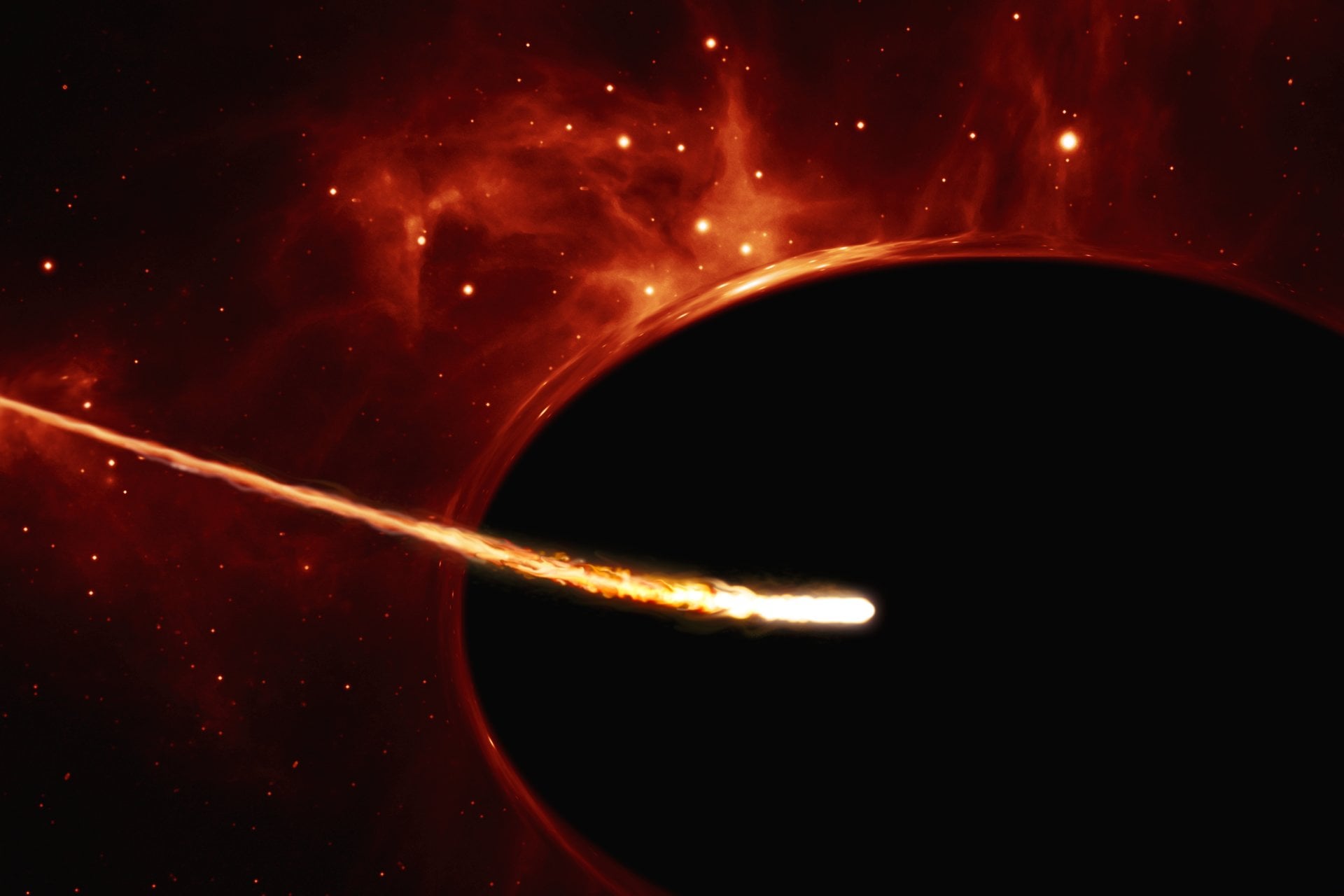
A star resembling our Sun is orbiting the supermassive black hole at the center of the Milky Way galaxy. This star ventures incredibly close to the black hole, reaching an orbital distance comparable to that of Neptune from our Sun. Its velocity is astonishing, achieving speeds exceeding 8% of the speed of light. This extreme celestial dance provides astronomers with a unique and valuable opportunity to rigorously test the predictions and limits of Einstein's theory of general relativity. By observing the star's behavior under such intense gravitational conditions, scientists can gather crucial data to validate or refine our understanding of gravity and the universe.
The close proximity and high velocity of this star relative to the galactic center's supermassive black hole present a compelling natural laboratory for probing fundamental physics. Observing deviations from predicted orbital mechanics could offer insights into potential modifications or extensions of general relativity, particularly in regimes of extreme gravity and velocity. Such empirical data is vital for refining theoretical models and advancing our comprehension of cosmic phenomena, potentially informing future research into quantum gravity or alternative theories of spacetime. This celestial observation underscores the ongoing interplay between theoretical frameworks and empirical evidence in scientific discovery.
AI-generated to prompt reflection — not editorial opinion, not advice, not a statement of fact. How this works.