Stewart Platform Robot "Stewy" Regains Leg Sensation Via Resistors
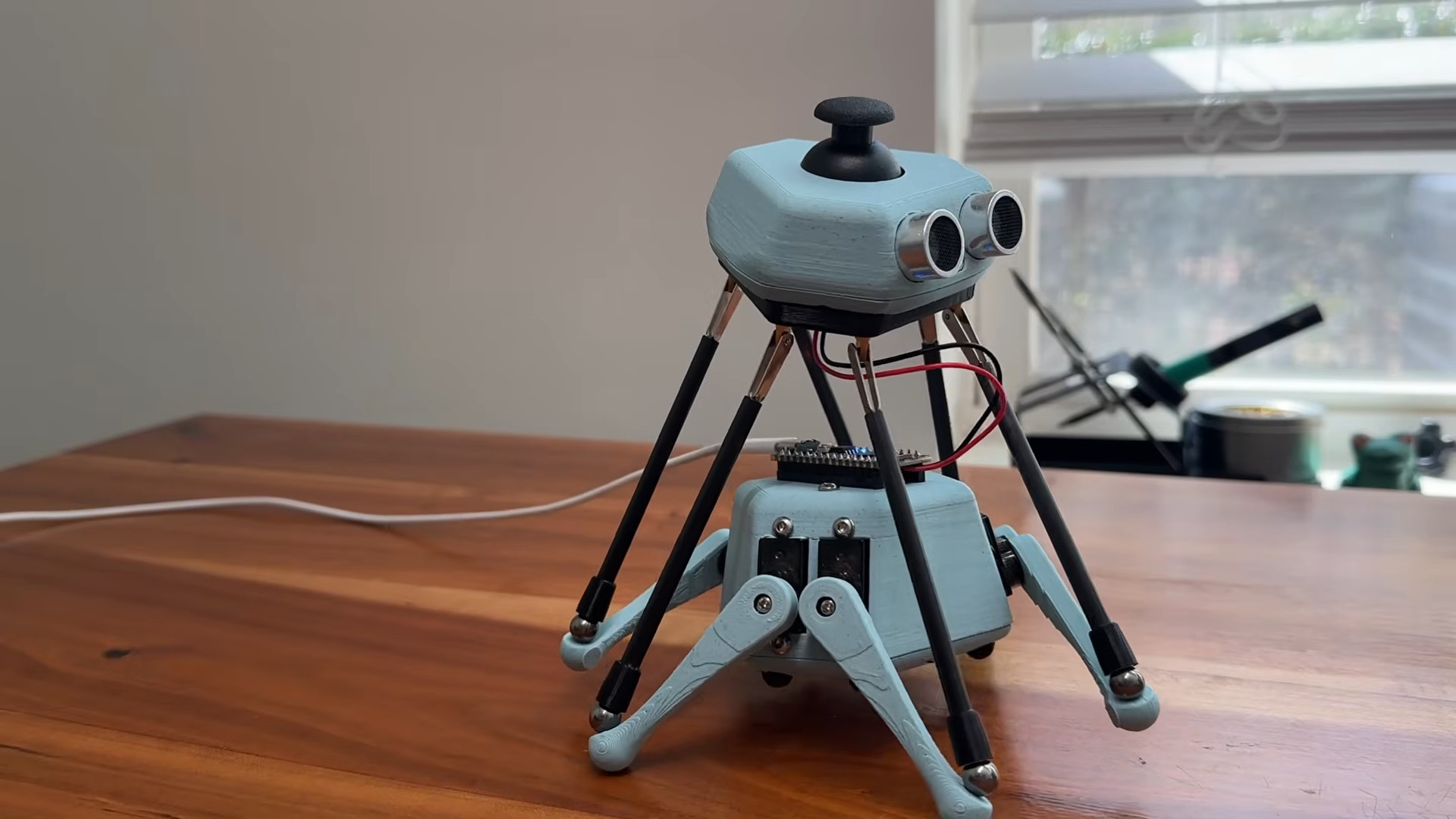
A robot named Stewy, distinguished by its unique kinematics and a Stewart platform for a head, has achieved a significant breakthrough in sensory feedback. The robot, which normally utilizes a 6-DOF actuated plate with a fixed base, has been equipped with resistors to restore a sense of feeling in its legs. This innovation allows Stewy to perceive tactile information, a crucial step in enhancing its interaction with the environment. The Stewart platform, typically employed in fixed-base applications, has been adapted in this instance to contribute to the robot's overall mobility and sensory capabilities. The development represents a novel approach to robotic embodiment, focusing on restoring and improving sensory input. Further details on the specific implementation and its implications for robotic dexterity are anticipated.
The integration of resistors to provide tactile feedback in Stewy's legs represents an intriguing application of sensor technology within robotics. This approach addresses the fundamental challenge of creating more intuitive and responsive robotic systems by mimicking biological sensory pathways. By enabling the robot to 'feel' its legs, developers are enhancing its capacity for nuanced interaction and potentially improving its ability to navigate complex terrains or manipulate objects with greater precision. This development aligns with the broader trend toward more embodied AI, where physical interaction and sensory perception are key to advancing artificial intelligence. The long-term implications may involve more sophisticated human-robot collaboration, as systems become better equipped to understand and react to their physical surroundings.
AI-generated to prompt reflection — not editorial opinion, not advice, not a statement of fact. How this works.