Storing Leftover Food in Large Pots Poses Serious Health Risks
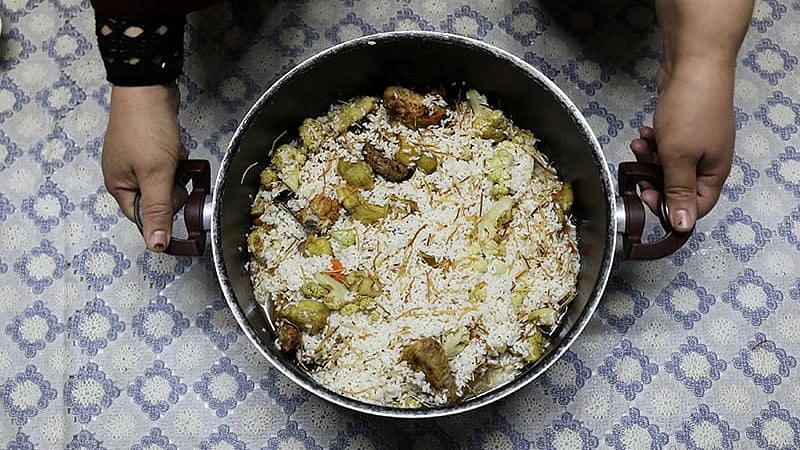
A common practice of storing leftover food like dal or meat curry in large pots, cooling them slightly before refrigerating the entire pot, significantly increases the risk of food poisoning. This method, while convenient, leads to slow cooling. The outer layers cool first, while the inner parts remain warm for hours, creating an ideal environment for harmful bacteria to multiply. Scientists advise that hot food should be cooled as quickly as possible to prevent bacterial growth. The most effective way to achieve this is by spreading the food in shallow containers, allowing heat to dissipate rapidly and reach a safe temperature faster. This principle, highlighted in a study published in the 'Journal of Food Protection,' emphasizes reducing the food's temperature from above 60°C to 4°C promptly. Research indexed in PubMed indicates that food layers less than 5 centimeters (about 2 inches) deep allow heat to escape quickly, significantly lowering the risk of dangerous bacteria like Bacillus cereus and Clostridium perfringens. This is particularly crucial for those who cook large quantities, as deep containers retain heat longer. Dividing large batches into shallow containers ensures even and rapid cooling. Good refrigerator habits include not sealing hot food immediately, leaving lids slightly ajar or loosely covered with foil until fully cooled. Avoid overcrowding refrigerator shelves; allow space for cold air circulation. Transferring large portions into smaller, shallow containers not only speeds up cooling and enhances safety but also simplifies reheating individual servings. Adhering to these simple food storage practices helps preserve leftovers, maintain taste, and reduce the incidence of foodborne illnesses.
The practice of storing large quantities of hot food in deep containers presents a systemic risk due to the physics of heat transfer. While convenient, this method creates a prolonged 'danger zone' temperature range where bacterial proliferation can occur. Scientific recommendations advocate for shallow containers to maximize surface area for rapid cooling, thereby mitigating microbial growth. This highlights a trade-off between immediate convenience and long-term public health. Future food safety protocols may need to integrate educational campaigns that emphasize the scientific rationale behind rapid cooling techniques, potentially leveraging smart packaging or optimized refrigeration technologies to automate or simplify safe food handling for consumers, especially in an era of increasing reliance on prepared and leftover meals.
AI-generated to prompt reflection — not editorial opinion, not advice, not a statement of fact. How this works.