Strait of Hormuz Closure Disputed Amidst Night of Attacks
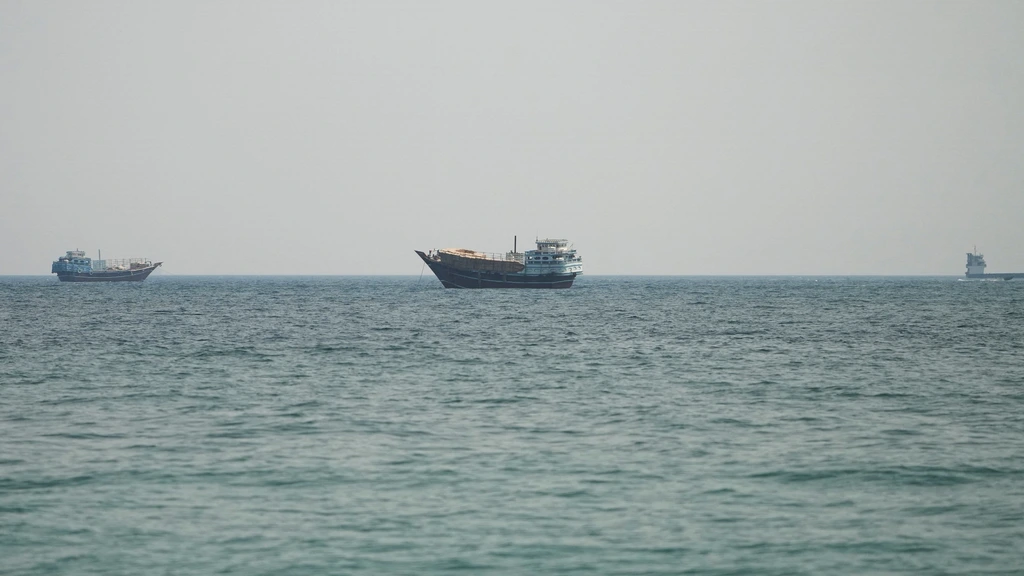
Confusion surrounds the status of the Strait of Hormuz after the Iranian Revolutionary Guard declared it closed, a claim disputed by the U.S. military and President Trump. The Iranian forces announced the closure following U.S. airstrikes, which the U.S. stated were in response to an Iranian attack on a vessel transiting the strait. The U.S. military asserted that the Strait of Hormuz remains open to all lawful maritime traffic, with American forces prepared to ensure safe passage and stating Iran has no control over the waterway. Conversely, Iranian authorities on X maintained that passage is currently impossible due to U.S. military movements, with requests to use the strait to be assessed once stability is restored. Shipping data from MarineTraffic indicates a decrease in traffic since Iran's announcement, with only a few non-Iranian vessels reportedly passing through. This development occurs as a fragile ceasefire between the U.S. and Iran, which would have also facilitated the reopening of the strait, is now in question after mutual attacks. The U.S. strikes targeted over 140 Revolutionary Guard sites, reportedly resulting in the death of one Iranian military member in Jask. Air raid sirens sounded in Bahrain, the UAE, and Qatar due to Iranian drones and missiles, with unconfirmed reports of explosions in Qatar. An American airbase in Jordan also reportedly sounded its alarm. Oman summoned Iran's ambassador to protest alleged Iranian attacks on a U.S. command center within Oman, urging calm. The U.S. embassy in Oman advised Americans to stay indoors and away from windows, citing concerns of further attacks.
The conflicting claims regarding the Strait of Hormuz highlight the volatile geopolitical dynamics and information warfare characteristic of the region. The U.S. military's assertion of open passage contrasts sharply with Iran's declaration of closure, creating significant uncertainty for global shipping and energy markets. This situation underscores the strategic importance of the strait and the potential for miscalculation to escalate tensions. The reported attacks and counter-attacks, including claims of strikes on bases in Oman and the UAE, suggest a complex web of actions and reactions, potentially driven by domestic political pressures and regional power struggles. The differing narratives serve to shape international perceptions and influence diplomatic responses, illustrating how control over information can be as critical as military positioning in such conflicts. Future developments will likely depend on the adherence to or breakdown of de-escalation mechanisms and the broader implications for international maritime law and security.
AI-generated to prompt reflection — not editorial opinion, not advice, not a statement of fact. How this works.