Street Vendors Protest Again in Copacabana Amid 'Zero Tolerance' Operation
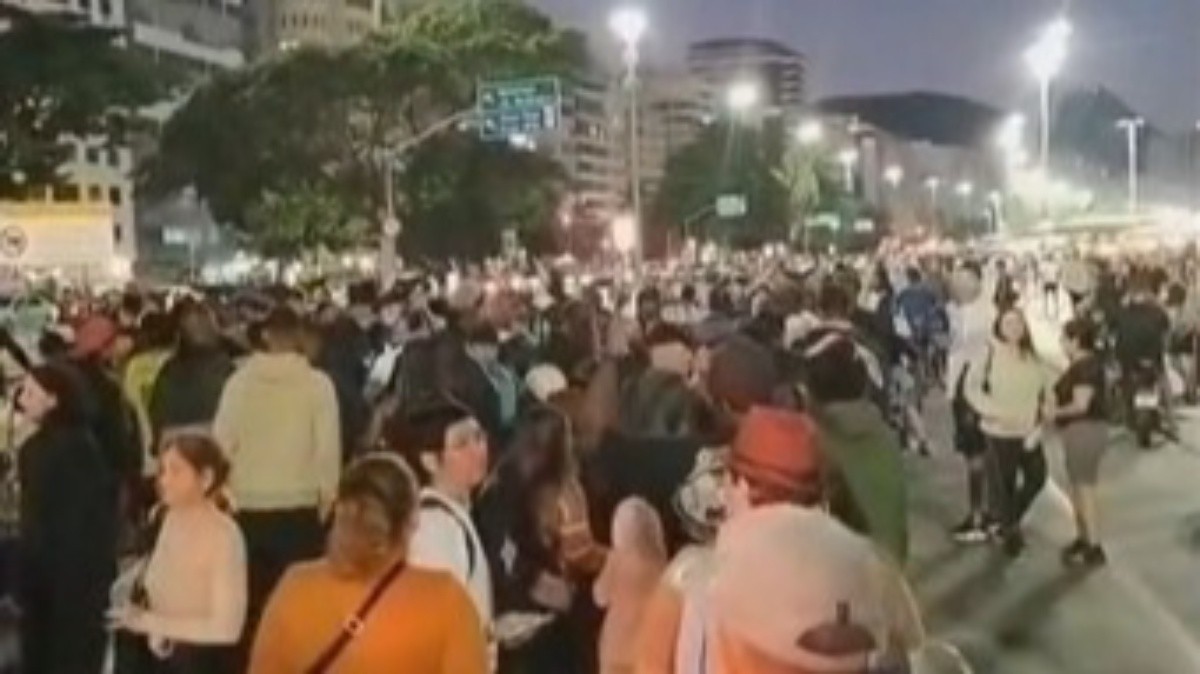
Approximately 200 street vendors protested again on Thursday afternoon, May 16th, along Avenida Atlântica in Copacabana, Rio de Janeiro. This demonstration followed a similar mobilization the previous day, coinciding with the launch of the 'Zero Tolerance' operation by the Rio de Janeiro City Hall in partnership with the State Government. The vendors marched along Avenida Atlântica, temporarily blocking traffic lanes near Rua Duvivier, which caused significant transit disruptions. Their demands include increased dialogue with public authorities, regularization of informal workers, and proper procedures for storing their merchandise. On Wednesday, May 15th, vendors from Copacabana and other tourist areas gathered in front of the Copacabana Palace before marching towards Ipanema, briefly occupying two lanes of Avenida Atlântica. The 'Zero Tolerance' operation, which began on Thursday, deploys security and enforcement teams across the beaches of Leme, Copacabana, Ipanema, and Leblon. Its stated goals are to combat illegal commerce, irregular occupation of public spaces, and extortion by criminal groups targeting vendors and stall owners.
The 'Zero Tolerance' operation in Rio de Janeiro's South Zone beaches highlights a recurring tension between municipal authorities seeking to regulate public space and informal economies, and street vendors whose livelihoods depend on that same space. While the operation aims to curb illegal commerce and criminal activity, its immediate impact has been to provoke protests from vendors seeking dialogue and regularization. This situation reflects broader challenges in urban governance, particularly in balancing economic inclusion for informal workers with public order and safety. The long-term effectiveness of such operations may depend on their ability to integrate vendors into the formal economy or establish sustainable coexistence frameworks, rather than solely relying on enforcement, which can lead to increased social friction and economic hardship for vulnerable populations. Future approaches could explore participatory models that address vendor needs while ensuring public access and preventing illicit activities.
AI-generated to prompt reflection — not editorial opinion, not advice, not a statement of fact. How this works.