Strong Winds Cause Chaos on São Paulo's North Coast, Damaging Property and Causing Accidents
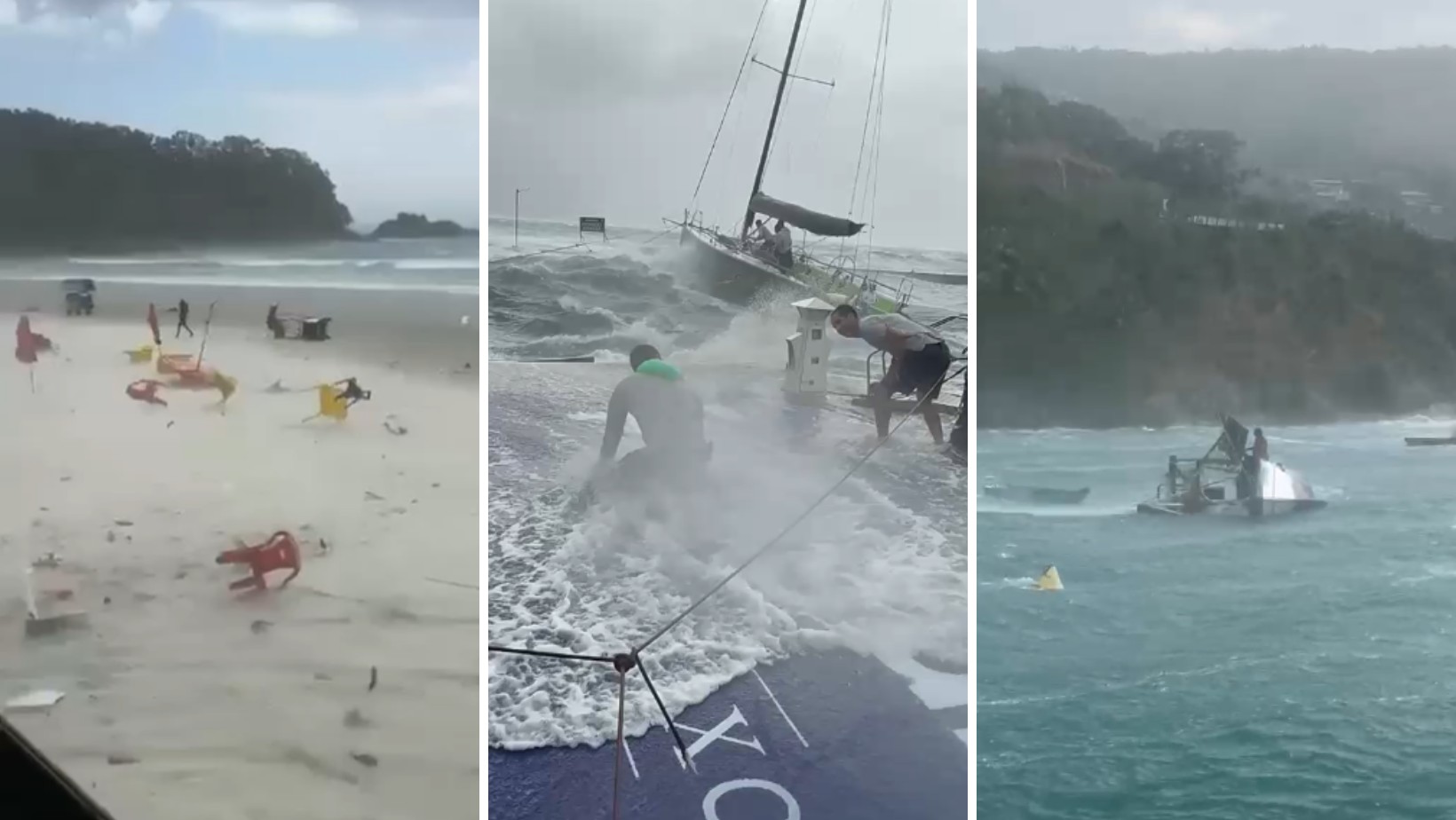
A severe windstorm swept through the North Coast of São Paulo on Wednesday, May 29th, causing significant damage and dangerous conditions. Videos captured by residents and tourists show gusts reaching up to 75 km/h in Ubatuba and Ilhabela, leading to widespread disruption. In Ubatuba, beachgoers scrambled for safety as tables and chairs from kiosks were violently swept across Praia Grande. Meanwhile, Ilhabela experienced rough seas, with boats at the pier being tossed about and people struggling to secure them. One alarming video depicted an individual clinging to the hull of an overturned vessel while awaiting rescue. The storm also resulted in boats being smashed against rocks in the Saco da Capela area. In Ubatuba's Itamambuca Beach, a 12-person speedboat capsized, though all occupants were rescued; however, a 6-year-old girl was hospitalized in serious condition. Fallen trees blocked sections of the Rio-Santos Highway (BR-101). Ilhabela's Civil Defense reported trees falling on homes and power lines, along with roof damage in several neighborhoods, including a municipal school whose roof was partially destroyed, leading to class suspensions. Despite the extensive property damage, no injuries were reported in Ilhabela. Further south, in São Sebastião, a 58-year-old fisherman died when his boat sank during the storm. Caraguatatuba also suffered damage, with schools losing roofs, trees falling, and a gas station's canopy being destroyed. The state's Civil Defense attributed the windstorm to an approaching cold front and continues to monitor weather conditions, advising the public to heed official alerts and avoid hazardous areas.
The severe weather event on São Paulo's North Coast highlights the vulnerability of coastal communities to extreme meteorological phenomena, exacerbated by infrastructure and safety protocols. The rapid spread of wind and waves, as evidenced by viral videos, underscores the critical need for robust early warning systems and immediate evacuation procedures. The incident also points to the potential systemic risks associated with maritime activities and beachside commerce during periods of heightened weather alerts. Future planning should consider climate change projections and their potential to increase the frequency and intensity of such events, necessitating adaptive infrastructure and enhanced emergency response capabilities to mitigate loss of life and property damage.
AI-generated to prompt reflection — not editorial opinion, not advice, not a statement of fact. How this works.