Strong Winds Cause Destruction on São Paulo Coast: One Dead, Schools Closed, Buildings Damaged
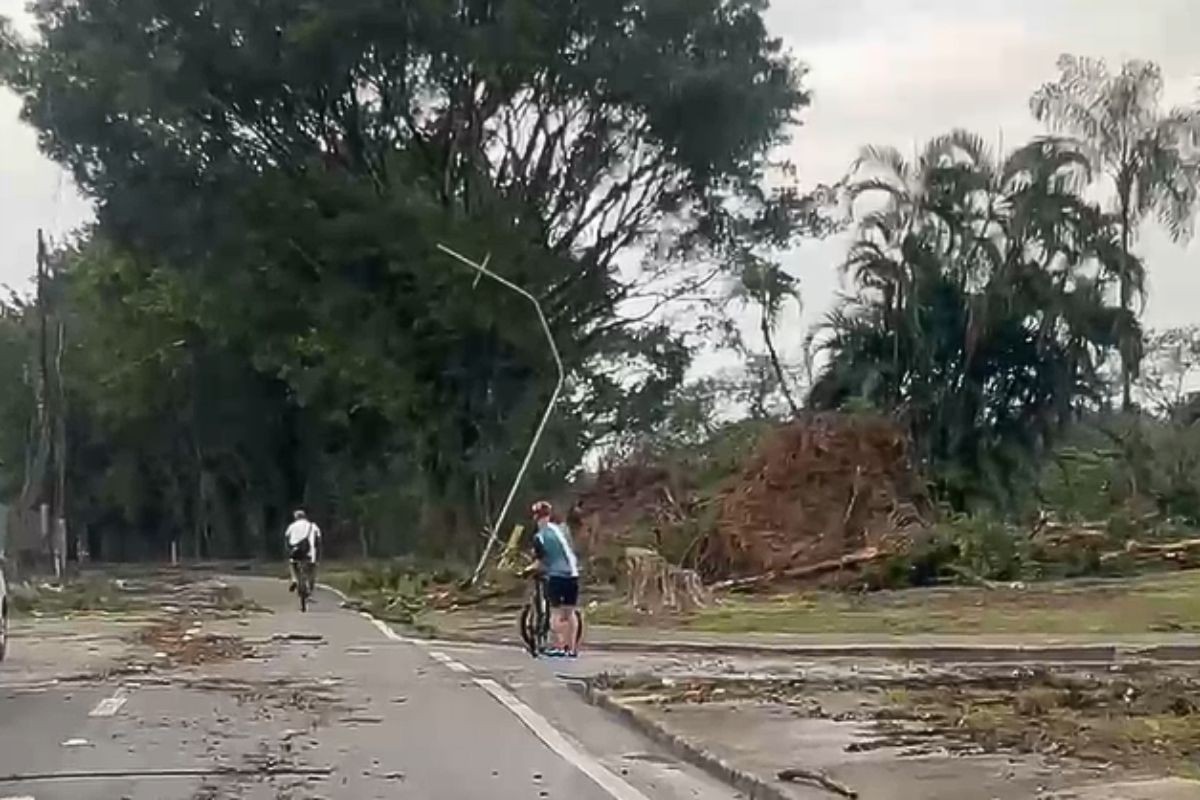
Powerful winds exceeding 100 km/h have swept across the coast of São Paulo, leaving a trail of destruction in their wake. The storm, which occurred on Wednesday, November 29th, resulted in widespread damage, including numerous roofs being torn off, buildings collapsing, and over 80 trees falling. Tragically, one unidentified homeless man died in Santos after being struck by a falling tree and falling into Canal 5. In Cubatão and Peruíbe, classes were suspended at schools that sustained damage. The government of São Paulo has deployed a crisis task force to the affected coastal region, with State Civil Defense teams actively assisting in Peruíbe. Residents are being advised to remain alert due to potential ongoing rain and wind, and to stay clear of trees, poles, and to avoid nautical activities. Santos experienced the highest wind gusts recorded at 111.8 km/h, with a peak tide of 1.64 meters. The city saw around 30 trees fall, with nearly half already removed, and all obstructed roads cleared. Other damages in Santos included fallen walls, a wooden building collapse, and displaced shipping containers. Municipal schools in Cubatão and Peruíbe also reported damage to roofs and internal trees, though no injuries occurred. Public health clinics in Santos also suffered roof damage. A metal structure from a store facade collapsed onto a group of people in Santos, though no injuries were reported in that specific incident. In Cubatão, approximately 20 trees fell, causing significant disruption. In Peruíbe, at least 30 facilities were affected, including 15 schools, though most classes resumed on Thursday, November 30th. Itanhaém, São Vicente, Bertioga, and Guarujá also reported fallen trees and other damages. Energy providers Neoenergia Elektro and CPFL Piratininga reported that while some areas experienced power outages, most services have been restored, with ongoing efforts to address complex issues involving damage to the electrical grid.
The severe weather event on the São Paulo coast highlights the vulnerability of urban infrastructure to extreme meteorological phenomena. The widespread damage, including fallen trees and structural failures, underscores the need for robust urban planning and maintenance strategies that account for climate change-induced weather variability. The response, involving crisis task forces and civil defense, demonstrates established emergency protocols. However, the event also raises questions about the resilience of public spaces and educational facilities, prompting a review of building codes and tree management practices. Looking ahead, investments in climate-resilient infrastructure and early warning systems will be crucial for mitigating future risks to public safety and economic stability in coastal regions.
AI-generated to prompt reflection — not editorial opinion, not advice, not a statement of fact. How this works.