Strong Winds Cause Tree Falls and Damage in Santana, Amapá
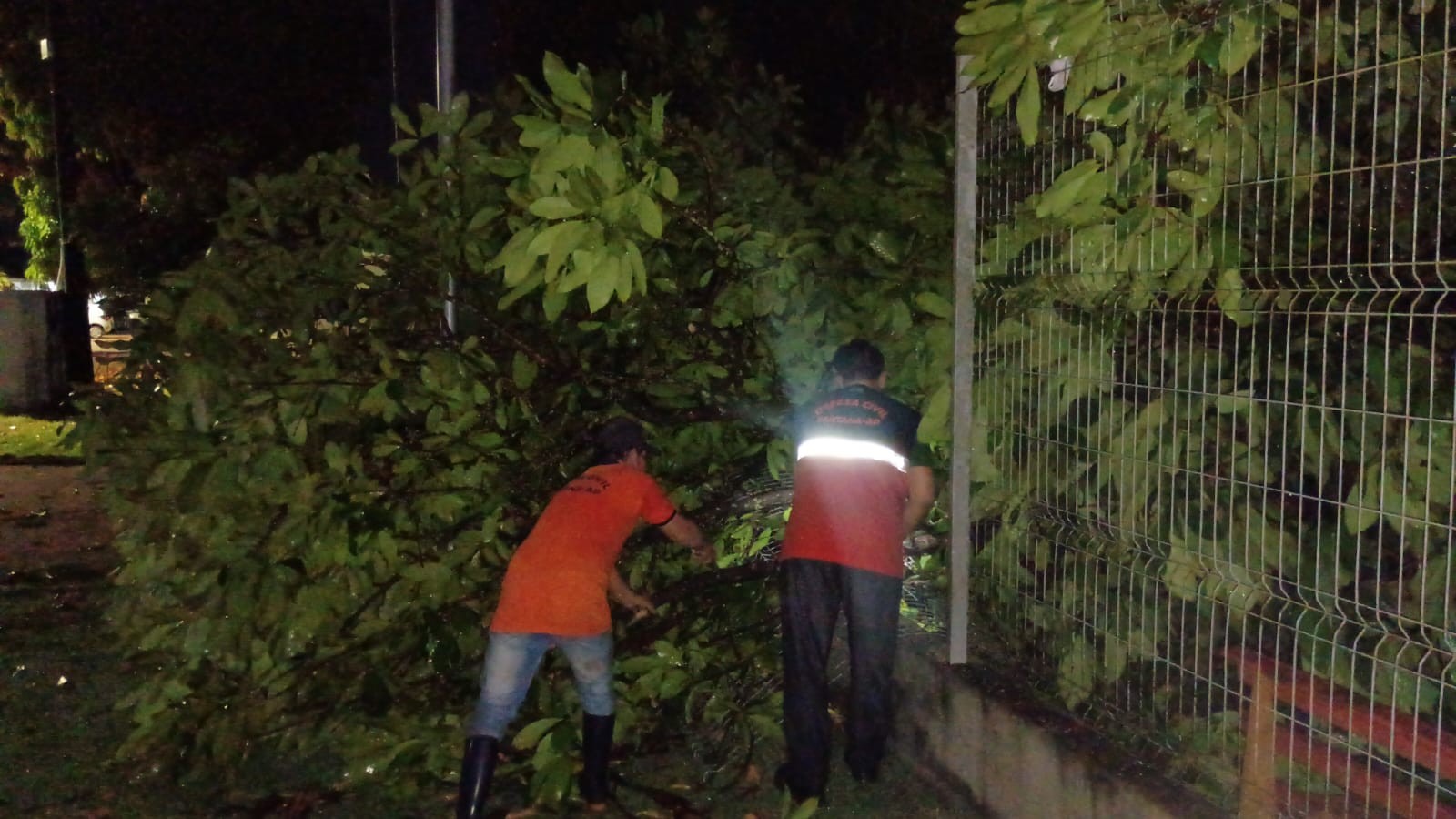
Residents in Santana, Amapá, captured footage of a powerful windstorm that struck the municipality on Sunday night, December 12th. The intense winds caused trees to fall across various neighborhoods, leading to significant damage and public disruption. Videos and photos shared on social media vividly illustrated the storm's force. The Civil Defense Department reported approximately eight incidents, primarily involving trees falling in public areas. One notable incident saw a tree collapse onto a residence, completely destroying its roof, though fortunately, no injuries were reported among the occupants. The Civil Defense Secretary, Helivanilton Ramos, confirmed that teams were dispatched to manage the aftermath, including clearing fallen trees that obstructed traffic and providing assistance to affected families. Specific locations where trees fell include Travessa Nelciana Vasques, Avenida Veiga Cabral, Avenida 21 de Abril, and areas near a gas station, the State Hospital of Santana, and along Avenida Rio Branco. Other affected areas were Travessa Senador Teotônio Vilela and Avenida Sete de Setembro, where a tree fell on a vehicle, blocking access to a home. Authorities are advising residents to contact the Fire Department at 193 or the Civil Defense of Santana at (96) 99102-5331 in case of emergencies related to wind damage.
This event highlights the vulnerability of urban infrastructure to extreme weather, exacerbated by potential underinvestment in tree management and public safety systems. The swift response from emergency services, while commendable, points to a reactive rather than proactive approach to mitigating risks from meteorological events. As climate patterns shift, municipalities like Santana will face increasing challenges in maintaining public safety and infrastructure resilience. Future planning should incorporate advanced meteorological forecasting and robust urban planning to anticipate and buffer against such impacts, ensuring community well-being and minimizing economic disruption through foresight and systemic preparedness.
AI-generated to prompt reflection — not editorial opinion, not advice, not a statement of fact. How this works.