Student's Discovery Aids in Locating Fallen Meteorite
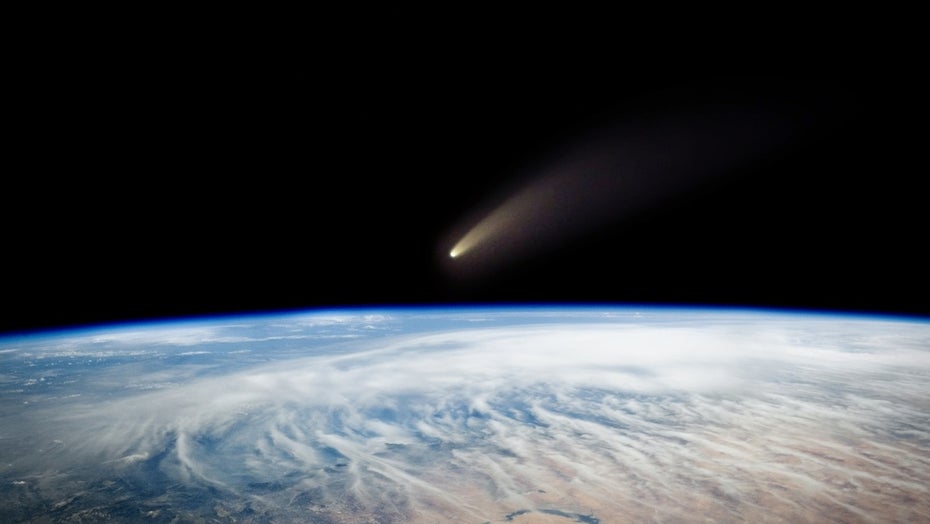
A student's unusual find has played a crucial role in helping a US research team locate a fallen meteorite. While space rocks are not uncommon, this marks the first time a celestial body's trajectory has been successfully traced solely through the analysis of sound waves and ground vibrations. This groundbreaking method allows scientists to reconstruct the path of extraterrestrial objects with unprecedented precision. The research team utilized sophisticated acoustic and seismic sensors to capture the subtle signals generated by the meteorite's atmospheric entry and impact. By analyzing these vibrations, they were able to pinpoint the likely impact zone, leading to the discovery of the meteorite. This innovative approach could revolutionize meteorite hunting and the study of cosmic materials. It opens new avenues for understanding the composition and origin of objects that fall to Earth. The successful application of this technique highlights the potential of interdisciplinary scientific methods.
This event showcases an innovative application of seismic and acoustic monitoring, traditionally used for geological or security purposes, to a new domain: astrophysics. The ability to trace a meteorite's trajectory using only sound and ground vibrations represents a significant advancement in observational astronomy and planetary science. This method could enhance the recovery rate of extraterrestrial material, providing valuable data for scientific research. Future developments might integrate this technique with existing sky-monitoring networks to create a more comprehensive system for detecting and tracking incoming celestial objects, potentially improving our understanding of near-Earth objects and the early solar system.
AI-generated to prompt reflection — not editorial opinion, not advice, not a statement of fact. How this works.