Student with low JEE score gains admission to top US universities
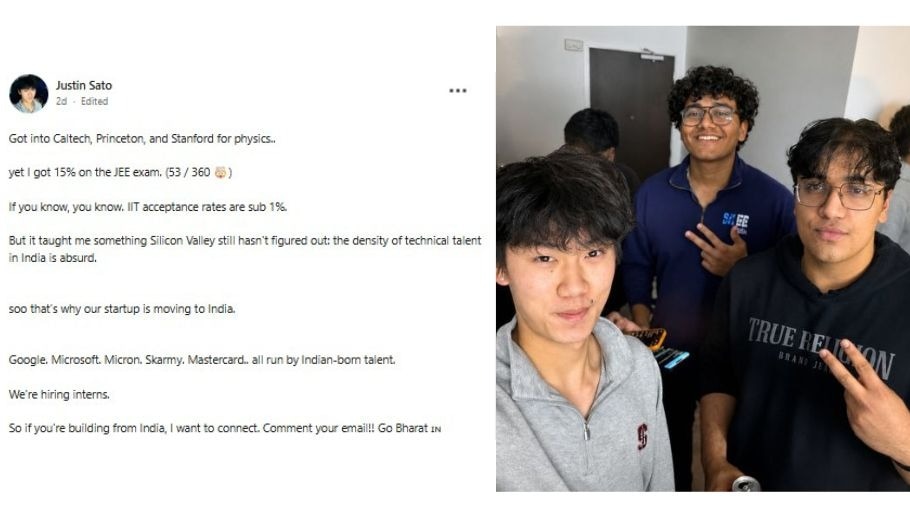
Justin Sato, a student at Stanford University, revealed on LinkedIn that he scored only 53 out of 360 on the Joint Entrance Examination (JEE). Sato's post quickly went viral, reigniting discussions about India's JEE-based IIT admission system and the admission processes at top American universities. The case highlights how a student with a seemingly low score on a highly competitive Indian entrance exam was able to secure admission to a prestigious institution abroad. This has led to comparisons between the two educational systems and their respective criteria for student selection. The incident prompts questions about the holistic review processes employed by US universities versus the standardized testing focus of the JEE. It also raises awareness about potential alternative pathways to higher education for students who may not excel in traditional entrance exams. The viral nature of Sato's post suggests a widespread interest in understanding these differing admission philosophies.
This event prompts a comparative analysis of global higher education admission systems. The disparity between a low score on India's highly competitive JEE and admission to a top US university like Stanford suggests differing evaluation metrics. US institutions often employ a more holistic review, considering extracurriculars, essays, and recommendations alongside academic performance. Conversely, the JEE is a rigorous standardized test designed to identify top engineering talent in India. The viral nature of this student's experience highlights a potential disconnect or perceived unfairness in how academic potential is measured across different educational paradigms. It raises questions about whether standardized tests alone adequately capture a student's capabilities or if alternative assessment methods, like those potentially used by Stanford, offer a more comprehensive view. This could encourage a re-evaluation of admission criteria to better identify diverse talents and reduce the pressure associated with high-stakes standardized testing.
AI-generated to prompt reflection — not editorial opinion, not advice, not a statement of fact. How this works.