Students Released from Police Custody Return to Jantar Mantar Protest Site
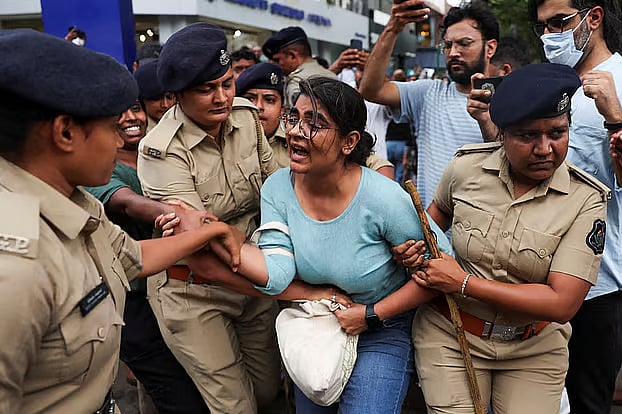
Students detained during protests at Jantar Mantar in New Delhi have been released and have returned to the protest site. The demonstrations, organized under the banner of the Kokroch Janata Party (CJP), are demanding an end to exam paper leaks and corruption in the education sector, and calling for the resignation of Education Minister Dharmendra Pradhan. The protests have seen participation from people of various backgrounds across the country. On Monday, demonstrators marching from Jantar Mantar towards Parliament were met with police resistance, including lathi-charges and tear gas. Several individuals were detained. By Tuesday evening, less than 24 hours after their detention, many protesters, including some directly from police stations, had returned to Jantar Mantar. Among them was Krishna, a 12th-grade student aspiring to be a professor, who alleged that female police officers pulled her hair and threatened her with jail during her arrest. Samir Dorwal, a 21-year-old Delhi University student, was detained and held at Mandir Marg police station overnight before being released on a Rs 5,000 bail. He expressed concern about facing his parents, who are unaware of his detention. Siddharth, a 22-year-old law student, described his arrest as frightening but noted that the police treated them well. Seema Yadav, 38, and her 16-year-old daughter Krishna, who traveled from Aligarh, also recounted being separated and forcibly moved by police, with Seema fainting during the ordeal. Despite the detentions and alleged mistreatment, the protesters remain resolute in their commitment to continue their demonstrations.
The student protests at Jantar Mantar highlight significant public concern over educational integrity and governance. The reported interactions with law enforcement, including allegations of rough handling, underscore the critical need for de-escalation protocols and adherence to due process during public demonstrations. As educational systems globally grapple with technological disruption and equity challenges, the demands for transparency and accountability in India's education sector reflect a broader trend of citizen engagement with institutional reform. Future policy considerations may involve strengthening oversight mechanisms and fostering dialogue between students, educators, and government bodies to address systemic issues proactively, rather than reactively, thereby promoting a more stable and trusted educational environment.
AI-generated to prompt reflection — not editorial opinion, not advice, not a statement of fact. How this works.