Students showcase innovative research on dengue, AI, and disaster management at CUET festival
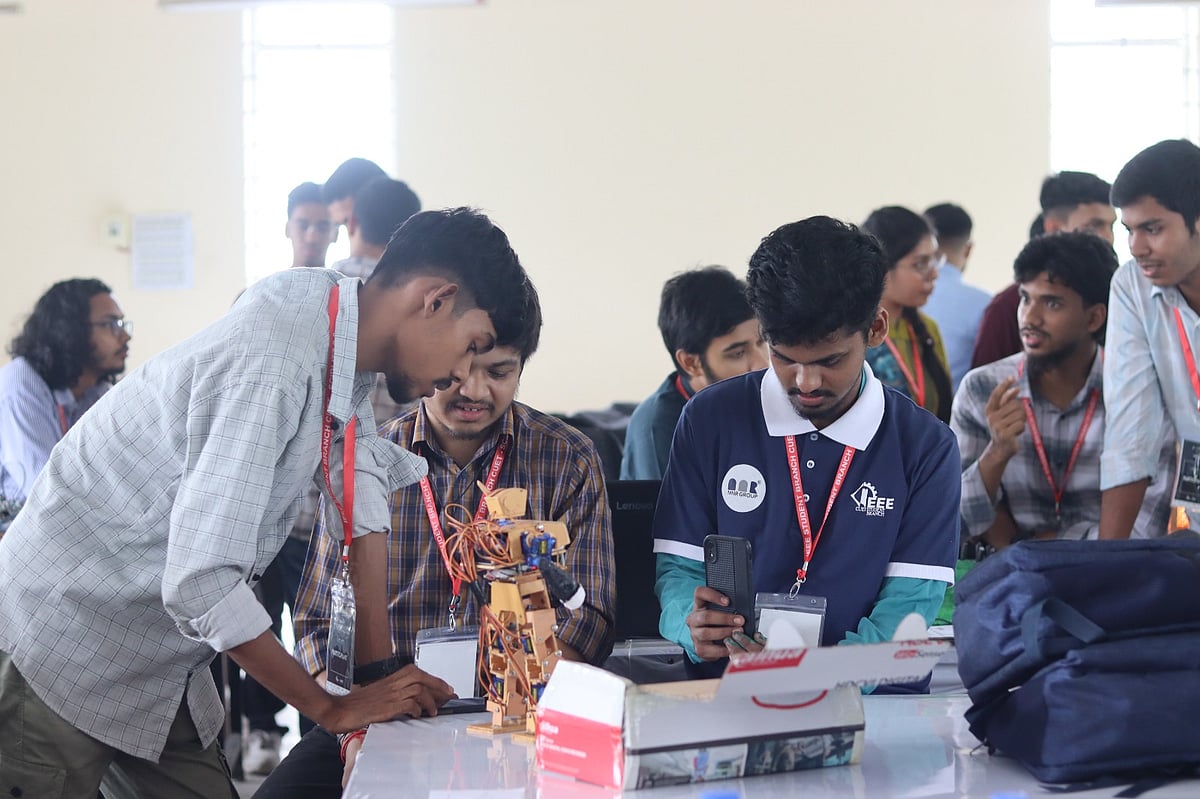
Students at the Chittagong University of Engineering and Technology (CUET) presented their innovative research at the 'Three Minute Thesis' competition, a part of the 'Cyblitz 2.0' festival. The competition challenged participants to present their research models within a strict 180-second timeframe. Topics covered a wide range of critical issues, including predictive models for dengue outbreaks, methods to reduce errors in artificial intelligence systems, and the development of smart insulin patches. Other innovative ideas presented involved the use of blockchain technology for immigration processes and the deployment of drones for disaster relief operations. This event highlighted the students' capacity for creative problem-solving and their engagement with pressing societal challenges.
The 'Three Minute Thesis' competition format encourages concise and impactful communication of complex research, a vital skill in an era demanding rapid technological advancement and effective problem-solving. By focusing on areas like dengue prediction, AI error reduction, and disaster management, students are engaging with critical public health and societal resilience challenges. The emphasis on innovative solutions, from smart patches to drone deployment, reflects a growing trend of leveraging technology for practical applications. This initiative fosters a culture of innovation and prepares future professionals to address complex, interdisciplinary problems, aligning with the need for agile responses to global issues in the coming decade.
AI-generated to prompt reflection — not editorial opinion, not advice, not a statement of fact. How this works.